
Tech
stormuring: The Hidden Architecture of Chaos in Complex Era


Introduction
In a world defined by acceleration, disruption, and constant reinvention, new words often emerge to describe realities that older language fails to capture. One such emerging concept is stormuring. It speaks to a pattern many of us recognize but struggle to name: the structured intensity that arises within chaos. Whether in technology, social systems, leadership, creativity, or personal transformation, we see moments when turbulence does not destroy but reorganizes. Something powerful forms inside disorder.
The idea of stormuring captures this paradox. It suggests that storms—literal or metaphorical—are not merely forces of destruction but engines of reconfiguration. Within the turbulence lies an invisible architecture shaping what comes next. To understand stormuring is to understand how upheaval becomes design, how conflict becomes catalyst, and how volatility becomes direction.
This concept matters because we are living in an era where stability is rare and change is relentless. Recognizing patterns within disruption can shift how we lead, innovate, adapt, and grow. Rather than fearing intensity, we begin to read it. Rather than resisting complexity, we navigate it.
What Is stormuring
stormuring is the process by which structured patterns emerge from turbulent or chaotic conditions, producing transformation rather than collapse. It describes the hidden order that develops inside disruption. Instead of viewing chaos as random or destructive, stormuring recognizes it as a dynamic force capable of reorganizing systems into new configurations.
READ MORE: seo instant appear highsoftware99.com Explained: Real Insights and Practical Understanding
The term combines the emotional weight of a storm with the deliberate quality of structuring. It represents the moment when pressure, uncertainty, and instability begin to generate form. This may occur in organizations facing crisis, societies undergoing rapid change, creative processes marked by confusion, or individuals navigating personal upheaval. In each case, the turbulence is not meaningless. It carries direction.
Unlike simple adaptation, stormuring implies intensity. It suggests that meaningful restructuring often requires friction. Growth does not always arise from calm progression; it frequently emerges from collision, contradiction, and tension.
Understanding stormuring reframes how we interpret disruption. Instead of asking how to eliminate the storm, we ask what the storm is building.
The Origins and Conceptual Foundations
Although stormuring is a contemporary expression, the logic behind it draws from long-standing ideas in complexity science, systems theory, and even ecology. Natural systems provide compelling examples. Forest fires, for instance, appear devastating, yet they clear debris, release nutrients, and allow new growth to flourish. Coral reefs regenerate after severe bleaching events in altered but sometimes more resilient forms. Weather systems themselves reorganize atmospheric energy into patterned formations.
In human systems, similar dynamics occur. Economic downturns often trigger innovation. Technological revolutions destabilize established industries but create entirely new markets. Social movements disrupt norms and eventually reshape institutions.
What distinguishes stormuring from older theories of change is its emphasis on intensity as a structural ingredient. It is not merely that systems evolve; it is that they often require concentrated pressure to reorganize at deeper levels. Incremental change rarely rewrites foundations. Turbulence does.
The concept also reflects psychological truths. Personal breakthroughs frequently follow periods of confusion or emotional conflict. Identity shifts often arise after instability forces reassessment. The storm is uncomfortable, but it reorganizes perspective.
stormuring in Personal Transformation
On an individual level, stormuring can be seen during life transitions that initially feel overwhelming. Career loss, relocation, illness, or unexpected opportunity can dismantle routines and assumptions. During such periods, identity feels fragmented. Yet over time, new clarity emerges.
This is not accidental. Turbulence strips away outdated structures. It exposes weaknesses and assumptions. When a person navigates this instability rather than avoiding it, they begin constructing a more aligned framework for decision-making and self-understanding.
Psychologists often describe growth following adversity as post-traumatic development. However, stormuring offers a broader lens. It does not require trauma. It refers to any concentrated period of internal or external pressure that compels restructuring.
The key difference lies in agency. Stormuring is not passive suffering. It involves engaging with disruption, interpreting it, and allowing it to reorganize priorities and direction. Those who consciously navigate such phases often emerge not just resilient, but redesigned.
stormuring in Organizations and Leadership
Businesses and institutions frequently encounter moments that test their stability: technological disruption, regulatory shifts, competitive threats, or internal breakdowns. Traditional management thinking focuses on damage control—restoring equilibrium as quickly as possible. Yet history shows that some organizations emerge from crisis stronger, more innovative, and more focused than before.
In these cases, stormuring is at work. The pressure exposes inefficiencies, outdated processes, and cultural weaknesses. Leaders who recognize the structural potential inside turbulence use the moment to rethink strategy rather than simply patch vulnerabilities.
For example, many companies undergoing digital transformation initially experience confusion and resistance. Roles change, workflows collapse, hierarchies shift. Productivity may temporarily dip. However, if leadership interprets the chaos as a restructuring opportunity rather than a failure, the organization often emerges more agile and future-ready.
Stormuring in leadership demands emotional steadiness. It requires tolerating ambiguity long enough for patterns to form. Leaders must resist the urge to over-control. They must listen, observe, and allow new configurations to surface from within the organization itself.
stormuring in the Digital Age
The digital era provides one of the clearest macro-scale illustrations of stormuring. The rapid rise of social media, artificial intelligence, decentralized finance, and remote work destabilized long-standing systems. Education models shifted. Communication norms transformed. Traditional industries fractured.
At first glance, this appeared chaotic. But over time, new structures solidified. Entirely new professions emerged. Hybrid work cultures formed. Global collaboration accelerated. Communities reorganized beyond geographic boundaries.
What makes stormuring particularly visible in the digital age is speed. Technological turbulence compresses the timeline between disruption and restructuring. Instead of decades, change unfolds in years or even months.
However, digital stormuring also carries risks. Not all turbulence leads to healthy outcomes. Misinformation ecosystems, algorithmic polarization, and digital burnout demonstrate that structure emerging from chaos is not automatically beneficial. The quality of the restructuring depends on intentional design, ethical frameworks, and adaptive governance.
Understanding stormuring in the digital context encourages more responsible innovation. It pushes creators and policymakers to anticipate how turbulence might reorganize systems rather than simply chasing novelty.
The Psychological Mechanics Behind stormuring
At a deeper level, stormuring operates through cognitive and emotional mechanisms. When confronted with instability, the human brain seeks patterns. Uncertainty triggers discomfort, and the mind instinctively tries to resolve it. This pattern-seeking impulse can produce creativity.
Neurological research suggests that moderate stress enhances problem-solving and learning. Intense but manageable pressure increases alertness and drives exploration of new strategies. In this sense, stormuring reflects a neurobiological reality: disruption activates adaptive circuitry.
However, the balance is delicate. Excessive stress without support can overwhelm rather than restructure. The difference lies in whether individuals or systems possess enough resilience to metabolize turbulence.
Stormuring therefore requires containment. Just as a physical storm forms within atmospheric boundaries, transformative chaos needs frameworks. Mentorship, collaborative dialogue, ethical guidelines, and reflective practices provide containers that prevent collapse while allowing reconfiguration.
Cultural and Social Dimensions
Societies often experience collective stormuring during periods of rapid change. Political realignments, generational shifts, technological revolutions, and global crises create friction across cultural narratives. Old assumptions clash with emerging values.
While such periods feel unstable, they frequently produce long-term recalibration. Labor rights movements reshaped economic systems. Civil rights activism transformed legal frameworks. Environmental advocacy continues to restructure corporate accountability.
Stormuring at the societal level is complex because competing visions attempt to define the new structure. The turbulence becomes a negotiation space. Through debate, resistance, and experimentation, societies eventually consolidate around new norms.
This process can be painful and prolonged. Yet understanding it as stormuring reframes conflict not solely as breakdown but as structural dialogue. It emphasizes that meaningful progress often requires friction.
Criticisms and Misinterpretations
Like any emerging concept, stormuring can be misunderstood. One common misinterpretation is romanticizing chaos. Not all disruption is constructive. War, exploitation, and systemic injustice cannot be reframed as beneficial storms without trivializing harm.
Another risk lies in passivity. Leaders might justify poor planning by claiming that turbulence will eventually self-organize into something better. Stormuring does not eliminate responsibility. It recognizes structural potential within chaos, but intentional guidance remains crucial.
There is also the danger of overextending the concept. Not every inconvenience qualifies as stormuring. The term describes transformative turbulence that reorganizes foundations, not minor adjustments.
Clear distinction is essential. Stormuring is neither blind optimism nor fatalism. It is a lens for interpreting intense change with strategic awareness.
Harnessing stormuring for Innovation
When consciously applied, stormuring becomes a strategic tool. Innovators often simulate controlled turbulence to provoke new structures. Hackathons compress pressure into short bursts, forcing creative reorganization. Startups disrupt established models, creating market-level restructuring.
In creative fields, artists deliberately immerse themselves in ambiguity before clarity emerges. Writers draft freely before editing shapes coherence. Designers experiment wildly before refining prototypes. The storm precedes the structure.
The practical implication is not to avoid chaos but to design environments where it can safely generate transformation. Psychological safety, iterative experimentation, and flexible systems allow turbulence to become productive rather than destructive.
In education, this might mean encouraging debate and problem-based learning rather than rigid memorization. In organizations, it may involve cross-functional teams and adaptive planning. In personal development, it can include reflective practices that process uncertainty instead of suppressing it.
The Future Relevance of stormuring
As global complexity intensifies, stormuring is likely to become increasingly visible. Climate volatility, technological acceleration, geopolitical shifts, and cultural evolution ensure that stability will remain temporary.
The question is not whether storms will arise but how societies interpret them. If disruption is viewed solely as threat, responses will prioritize short-term containment. If it is seen as potential restructuring energy, responses may focus on adaptive redesign.
Stormuring encourages long-term thinking. It asks what structures are forming beneath visible turbulence. It challenges leaders to detect emerging patterns before they solidify. It invites individuals to see personal upheaval as a formative phase rather than an endpoint.
This mindset does not eliminate uncertainty, but it provides orientation. It replaces fear-driven reaction with thoughtful navigation.
READ MORE: microwey: The Hidden Science Behind Modern Heating Shift Era
Conclusion
Stormuring captures a truth that history, psychology, and nature repeatedly reveal: chaos is not always the opposite of order. Often, it is the birthplace of a new one. Within turbulence lies pattern, within pressure lies reorganization, and within instability lies possibility.
To understand stormuring is to adopt a more mature relationship with change. It neither glorifies disruption nor denies its discomfort. Instead, it recognizes that meaningful transformation frequently demands intensity. Structures built in calm may endure, but structures forged in storms often redefine foundations.
In an era defined by complexity, this perspective is invaluable. When the ground shifts, the instinct may be to cling to what was. Yet sometimes the wiser move is to observe what is forming. The storm may not be ending something. It may be constructing something we have yet to see.
FAQs
What makes stormuring different from ordinary change?
Ordinary change often involves gradual adjustment within existing structures. Stormuring refers specifically to intense turbulence that reorganizes foundational patterns, producing a deeper transformation rather than surface modification.
Is stormuring always positive?
No. The outcome depends on resilience, guidance, and ethical frameworks. While turbulence can create opportunity, unmanaged chaos can also lead to harm. The concept highlights potential, not guaranteed improvement.
Can individuals intentionally trigger stormuring?
People can create controlled environments that encourage productive disruption, such as challenging assumptions, exploring new skills, or stepping outside comfort zones. However, authentic stormuring usually involves genuine pressure rather than artificial drama.
How can leaders navigate stormuring effectively?
Leaders benefit from emotional steadiness, openness to emerging patterns, and the ability to provide containment without excessive control. Clear communication and adaptive thinking are essential.
Why is stormuring especially relevant today?
Modern life is marked by rapid technological, social, and environmental shifts. Recognizing structural potential within disruption helps individuals and institutions respond creatively instead of reactively.

The best api search company’s homepage isn’t just a digital storefront. It’s a powerful gateway that communicates trust, speed, innovation, and clarity within seconds. When developers, enterprises, and startups land on an API search company’s homepage, they’re not casually browsing. They’re evaluating performance, reliability, documentation quality, integration simplicity, and long-term partnership potential. A well-crafted homepage shapes that decision instantly.
In today’s data-driven world, APIs power everything from fintech apps to AI platforms. Choosing the right search API provider is critical. This guide breaks down what makes a homepage stand out, what elements signal authority, and how the best companies structure their front-facing experience to convert visitors into loyal users.
Quick Bio
| Attribute | Details |
|---|---|
| Industry | API Search & Data Infrastructure |
| First Major API Search Providers Emerged | Early 2000s |
| Modern Cloud API Search Expansion | 2010–Present |
| Notable Companies | Algolia (Founded 2012), Elastic (Founded 2012), Google Cloud (Launched 2008), Microsoft Azure (Launched 2010) |
| Headquarters Examples | San Francisco, Mountain View, Paris, Amsterdam |
| Core Services | Search APIs, indexing, analytics, AI-driven results |
| Primary Users | Developers, Enterprises, SaaS Companies |
| Global Market Growth | Rapid expansion since 2015 due to AI & cloud adoption |
What Defines the Best API Search Company’s Homepage?
The best api search company’s homepage balances technical clarity with emotional appeal. It speaks to engineers and executives at the same time. It makes performance measurable, reliability visible, and integration approachable.
READ MORE: Florida Woman Wins Monopoly Lottery in Florida
A strong homepage immediately answers five unspoken questions:
- Is this fast?
- Is this reliable?
- Is this scalable?
- Is this secure?
- Is this easy to integrate?
If visitors can’t find those answers within seconds, they leave.
Take Algolia for example. Their homepage focuses heavily on speed and relevance. The message is immediate and benefit-driven. Meanwhile, Elastic emphasizes scalability and flexibility, appealing to enterprises managing massive datasets.
The homepage is more than branding. It’s proof.
Visual Identity and First Impressions
The visual design of the best api search company’s homepage sets the tone instantly. Clean interfaces, structured layouts, whitespace balance, and bold typography create a sense of control and sophistication.
Color palettes often reflect trust and innovation. Blues signal reliability. Gradients hint at AI and modernity. Subtle animations communicate technological depth without overwhelming the visitor.
More importantly, strong homepages demonstrate the product visually. Screenshots of dashboards, query results, analytics panels, and real-time performance metrics help visitors imagine using the API. Showing instead of telling builds credibility fast.
A homepage should never feel cluttered. API users appreciate clarity. If the interface looks chaotic, they assume the infrastructure might be too.
Messaging That Speaks to Developers and Decision-Makers
One of the hardest balances to strike is dual messaging. Developers want documentation, performance benchmarks, SDK availability, and example queries. Executives want scalability, compliance, and cost predictability.
The best api search company’s homepage handles both audiences gracefully.
For example, Google Cloud integrates technical detail with enterprise-level reassurance. The messaging transitions from performance metrics to case studies without losing focus.
Clear headlines often follow this pattern:
- Outcome-focused value
- Technical capability
- Business reliability
Short, confident statements work best. Avoid jargon overload. Instead of saying “advanced multi-layered distributed indexing architecture,” say “ultra-fast global indexing at scale.” Precision matters. Simplicity converts.
Performance Proof: Metrics Matter
API search services compete on measurable performance. Latency. Throughput. Uptime. Query relevance. Indexing speed.
The best api search company’s homepage includes quantifiable proof. Not vague claims. Real numbers.
For instance, companies like Microsoft Azure often showcase uptime commitments and global infrastructure coverage. Numbers create confidence. Developers respect transparency.
Case studies also play a major role. When a homepage shows how a fintech platform reduced search latency by 40% or improved product discovery conversion by 25%, the value becomes concrete.
Social proof works best when tied to performance.
Navigation Simplicity and Information Architecture
Great API homepages guide users logically. They avoid overwhelming dropdowns or hidden documentation.
The most effective structure typically includes:
- Clear product overview
- Developer documentation access
- Pricing transparency
- Integration guides
- Customer success stories
Navigation should feel intuitive. Engineers often land directly from documentation searches or GitHub references. The homepage must act as a bridge, not a barrier.
When visitors find documentation within one click, trust increases. When pricing is hidden behind demos, friction grows.
Transparency in Pricing and Plans
Transparency differentiates leaders from followers.
The best api search company’s homepage doesn’t obscure pricing. It either clearly displays tiered plans or offers a straightforward usage-based explanation.
Developers value clarity. They want to know:
- How pricing scales with queries
- Whether there’s a free tier
- If there are enterprise-level custom options
A confusing pricing model suggests hidden complexity. Simplicity suggests confidence.
Developer Experience and Documentation Access
The best api search company’s homepage prioritizes developer experience front and center.
Immediate access to documentation is crucial. Many leading providers position a “Get Started” or “View Docs” button in the hero section. That’s intentional. Developers want to test, not just read.
Code snippets increase engagement. Showing live examples in JavaScript, Python, or REST format reduces friction. It signals maturity and readiness.
An API homepage must communicate that integration takes minutes, not weeks.
Security and Compliance Communication
Security isn’t optional. It’s foundational.
Enterprises evaluating an API search solution need clear answers about encryption, data residency, compliance frameworks, and audit controls. The homepage should reassure without overwhelming.
Leading companies often dedicate visible sections to:
- Data encryption standards
- Compliance certifications
- Access controls
- Regional data centers
Trust is built when security is proactive, not buried in fine print.
Scalability and Global Infrastructure
APIs must scale with growth. Startups may begin with thousands of queries per day, but scale into millions.
The best api search company’s homepage addresses this journey directly. It reassures startups while appealing to enterprise-scale platforms.
Global infrastructure maps, latency heat maps, or distributed architecture diagrams subtly communicate readiness for expansion.
Companies like Elastic highlight distributed capabilities and cluster flexibility. That signals power without complexity.
Use Cases Beyond One Industry
Search APIs aren’t limited to ecommerce. They power:
- Healthcare data retrieval
- Financial transaction analysis
- Media content indexing
- SaaS platform internal search
- AI model retrieval systems
A strong homepage demonstrates cross-industry adaptability. It avoids pigeonholing itself into a single niche.
When the homepage showcases diverse industries, it expands perceived applicability. That broad relevance builds authority.
The Role of AI in Modern API Search
Artificial intelligence has reshaped search capabilities. Modern API providers integrate natural language processing, semantic matching, and personalization layers.
The best api search company’s homepage highlights intelligent relevance. Not just keyword matching. Contextual understanding.
AI-driven suggestions, typo tolerance, and predictive results demonstrate innovation. These features turn basic search into intelligent discovery.
Visitors should understand that they’re investing in future-ready infrastructure, not static indexing.
Calls to Action That Convert
A homepage without clear direction loses potential users.
Effective calls to action include:
- Start Free Trial
- Explore Documentation
- Deploy in Minutes
CTAs should be direct and benefit-driven. Subtle contrast colors increase visibility without being aggressive.
The best api search company’s homepage doesn’t overwhelm with options. It guides users toward the most valuable first step.
Real-World Example: Converting Curiosity into Integration
Imagine a SaaS founder searching for a scalable search API. They land on a homepage that immediately shows:
- Sub-50ms latency
- Clear integration guides
- Transparent pricing
- Strong case studies
Within minutes, they sign up for a free tier. Within hours, they integrate a test query. Within days, the product is live.
That journey begins with the homepage experience.
When clarity meets credibility, conversion follows naturally.
Common Mistakes to Avoid
Even technically strong companies sometimes fail at homepage execution.
Overly technical jargon alienates non-engineering decision-makers. Lack of metrics weakens trust. Poor navigation increases bounce rates.
Another common mistake is hiding documentation. If users must register before seeing examples, skepticism rises.
Clarity beats complexity every time.
Why Homepage Strategy Impacts Long-Term Growth
A homepage isn’t static marketing material. It evolves with product capabilities, market positioning, and audience maturity.
The best api search company’s homepage adapts as features expand. It updates messaging to reflect AI integration, global scaling, and performance enhancements.
When a homepage communicates leadership clearly, it positions the company as an industry standard. That perception drives partnerships, enterprise deals, and investor confidence.
In competitive API markets, differentiation begins at the first click.
READ MORE: Unbanned G+: Origins, Controversies, and Digital Legacy
Conclusion
The best api search company’s homepage is more than a design showcase. It’s a strategic tool that communicates speed, reliability, scalability, and trust within seconds. It bridges the gap between technical depth and business clarity. It provides measurable proof, seamless documentation access, and transparent pricing.
Companies like Algolia, Elastic, Google Cloud, and Microsoft Azure demonstrate how powerful a homepage can be when crafted intentionally.
If you’re evaluating API search providers, look beyond aesthetics. Examine clarity, proof, accessibility, and scalability messaging. A great homepage reflects a great infrastructure behind it.
Choose transparency. Choose measurable performance. Choose simplicity backed by power.
Frequently Asked Questions (FAQs)
1. What makes the best api search company’s homepage effective?
It clearly communicates speed, scalability, and reliability within seconds. It provides documentation access, transparent pricing, and measurable performance data to build immediate trust.
2. Why is documentation visibility important on an API homepage?
Developers want instant validation. Easy access to documentation shows maturity and reduces friction, encouraging quick testing and integration.
3. How does AI improve modern API search platforms?
AI enables contextual understanding, typo tolerance, personalization, and smarter relevance, transforming basic search into intelligent discovery.
4. Should pricing always be visible on the homepage?
Transparent pricing builds trust. Even if enterprise plans require consultation, basic tiers and usage models should be easy to understand.
5. Can API search solutions serve multiple industries?
Yes. Search APIs power ecommerce, healthcare, finance, SaaS platforms, AI systems, and media applications, making them highly adaptable across sectors.

Electric vehicles have changed the way we think about performance, efficiency, and everyday driving comfort. But one question continues to surface among new and potential EV owners: do the driving modes in Cadillac Lyriq offer different ranges or battery usages? It’s a smart question. After all, driving modes promise sportier acceleration, smoother cruising, or enhanced efficiency — but do they actually impact how far you can travel on a single charge?
In this in-depth guide, we’ll explore how the driving modes in the Cadillac Lyriq influence battery usage, real-world range, and overall efficiency. You’ll learn how each mode behaves, how regenerative braking factors into range, and what practical steps you can take to maximize mileage without sacrificing performance. Whether you’re researching before buying or optimizing your daily commute, this guide will give you clarity.
Quick Bio: Cadillac Lyriq
| Attribute | Details |
|---|---|
| Model Name | Cadillac Lyriq |
| Manufacturer | Cadillac (division of General Motors) |
| First Model Year | 2023 |
| Assembly Location | Spring Hill, Tennessee, USA |
| Platform | GM BEV3 (Ultium Platform) |
| Battery Type | Ultium Lithium-Ion |
| Battery Capacity | Approx. 102 kWh |
| EPA Estimated Range | Up to 312 miles (RWD), approx. 307 miles (AWD) |
| Drivetrain Options | Rear-Wheel Drive (RWD) / All-Wheel Drive (AWD) |
| DC Fast Charging | Up to 190 kW (RWD), 195 kW (AWD) |
| Notable Features | Super Cruise, 33-inch LED display, One-Pedal Driving |
Understanding Driving Modes in the Cadillac Lyriq
To answer whether driving modes in Cadillac Lyriq offer different ranges or battery usages, we first need to understand what these modes actually change.
READ MORE: https //www.microsoft.com /ink: Your Complete Guide to Digital Handwriting
Driving modes adjust how the vehicle responds to your inputs. In the Lyriq, modes typically include Tour (Normal), Sport, Snow/Ice, and My Mode (customizable). These settings influence throttle sensitivity, steering feel, and sometimes suspension tuning. However, they do not physically change the battery size or capacity.
Instead, they affect how aggressively the electric motors deliver power. That subtle distinction is where range differences begin.
When you press the accelerator in Sport mode, the Lyriq responds faster and more forcefully. That immediate power feels thrilling — but it often draws more energy. In Tour mode, throttle mapping is smoother and less aggressive, which tends to promote more efficient driving habits.
So technically, yes — driving modes can influence real-world range. But it’s not because the battery changes. It’s because your driving behavior changes.
Do the Driving Modes in Cadillac Lyriq Offer Different Ranges or Battery Usages?
Let’s directly address the core question: do the driving modes in Cadillac Lyriq offer different ranges or battery usages?
The short answer is: indirectly, yes.
The longer answer is more nuanced. The driving modes do not alter the battery chemistry, capacity, or official EPA rating. What they change is how quickly power is delivered and how aggressively the motors respond. That shift affects consumption patterns.
Here’s how each mode typically influences energy use:
Tour Mode (Default Efficiency Balance)
Tour mode provides balanced acceleration and comfortable steering. It encourages gradual power delivery, which often results in steadier energy consumption. For daily commuting, this mode usually delivers the most predictable range results.
Drivers who stay in Tour mode and accelerate smoothly often come close to EPA estimates.
Sport Mode (Performance Priority)
Sport mode sharpens throttle response and tightens steering feedback. The vehicle feels quicker and more dynamic. However, rapid acceleration demands more current from the battery pack.
Frequent use of Sport mode, especially in stop-and-go traffic, can noticeably reduce range. The difference may not seem dramatic on short drives, but over time, aggressive acceleration adds up.
Snow/Ice Mode (Traction Control Focus)
Snow/Ice mode softens throttle response to prevent wheel slip. While it’s designed for safety rather than efficiency, smoother power delivery can sometimes result in slightly more conservative battery usage.
However, cold weather — which often accompanies snow conditions — significantly impacts battery performance. That external factor typically plays a much bigger role in range than the mode itself.
My Mode (Customized Experience)
My Mode allows drivers to personalize steering feel and pedal response. If you configure it for aggressive throttle behavior, energy usage may increase. If you keep it comfort-oriented, efficiency remains closer to Tour mode.
Ultimately, driving modes influence how you interact with the car — and that interaction shapes battery consumption.
The Role of Regenerative Braking in Range
One of the most powerful tools for extending range isn’t actually a driving mode — it’s regenerative braking.
The Lyriq features one-pedal driving and adjustable regenerative braking. When you lift off the accelerator, the electric motors reverse function, converting kinetic energy back into stored battery power.
In city driving, this can significantly improve efficiency. Drivers who master smooth deceleration often recover measurable energy.
For example, imagine two drivers in identical Lyriqs:
- Driver A accelerates hard and brakes sharply.
- Driver B accelerates smoothly and anticipates stops early.
Driver B will likely see better range, even in the same driving mode.
Driving modes may subtly influence regen feel, but regenerative braking behavior plays a much bigger role in real-world efficiency than the selected performance setting.
Real-World Range vs. EPA Estimates
EPA range figures are determined under controlled conditions. For the Lyriq, that’s roughly 307–312 miles depending on configuration. But actual range varies widely based on:
- Driving speed
- Climate control usage
- Road terrain
- Weather conditions
- Driving habits
Sport mode at highway speeds with aggressive passing can reduce efficiency noticeably. On the other hand, steady cruising at moderate speeds in Tour mode can help you meet or even exceed projections.
It’s similar to gasoline vehicles. A car rated at 30 MPG can drop to 20 MPG with spirited driving. Electric vehicles behave the same way — just with kilowatt-hours instead of gallons.
How Much Range Difference Can You Expect?
Now let’s quantify expectations realistically.
In typical conditions, switching from Tour to Sport mode alone might not slash range by 30 or 40 miles. Instead, the difference often depends on how you drive within that mode.
If you frequently exploit the sharper throttle in Sport, you might see a 5–15% decrease in efficiency over time. That could translate to roughly 15–40 fewer miles per charge depending on driving patterns.
However, if you simply enjoy the tighter steering but maintain moderate acceleration, the impact may be minimal.
The mode is a tool. Your behavior determines the outcome.
Battery Usage Patterns in AWD vs. RWD Models
The Lyriq comes in both rear-wheel-drive and all-wheel-drive versions. AWD models use dual motors, which inherently consume slightly more energy under certain conditions.
In Sport mode, AWD vehicles can draw more power due to dual-motor engagement. That may influence battery usage more noticeably compared to RWD versions.
Still, driving style remains the dominant factor.
Think of driving modes as amplifiers. They don’t create energy consumption — they amplify how you use it.
Climate, Terrain, and External Factors
Even when asking do the driving modes in Cadillac Lyriq offer different ranges or battery usages, it’s essential to zoom out.
External conditions often outweigh mode selection entirely.
Cold temperatures reduce battery efficiency. High speeds increase aerodynamic drag. Hilly terrain demands more torque. Running the heater or air conditioning consumes additional energy.
In winter, range reductions of 10–20% are common regardless of driving mode. That drop has more to do with battery chemistry and cabin heating than Sport versus Tour settings.
So while modes matter, environment matters more.
Practical Tips to Maximize Range Without Sacrificing Enjoyment
You don’t need to avoid Sport mode forever. Instead, focus on smarter habits.
Here are two simple strategies that make a meaningful difference:
- Use Sport mode selectively for merging or short bursts of fun.
- Practice smooth acceleration and early regenerative braking.
Balancing enjoyment and efficiency is completely possible. Electric vehicles respond instantly, so even moderate throttle input feels satisfying.
Learning to modulate power gently can preserve range while keeping the drive engaging.
Technology That Helps Monitor Consumption
The Lyriq’s 33-inch curved display provides detailed energy usage data. Drivers can view efficiency trends, regenerative recovery stats, and projected remaining range.
This feedback loop is powerful. When you see how your driving impacts energy flow in real time, habits naturally adjust.
Many owners report that simply paying attention to the energy screen improves their average efficiency — regardless of driving mode.
The Psychological Factor of Driving Modes
Interestingly, part of the range impact comes from psychology.
When drivers select Sport mode, they often feel invited to drive more aggressively. The sharper steering and quicker pedal response create an emotional shift. That mindset can influence acceleration patterns without conscious awareness.
Tour mode subtly encourages smoother driving behavior. Snow/Ice mode promotes caution.
So while the hardware stays constant, the driver’s mental approach changes — and that affects battery usage.
Is There a “Most Efficient” Mode?
Tour mode generally delivers the most consistent efficiency for everyday driving. However, efficiency ultimately depends more on driving style than the selected mode.
A disciplined driver in Sport mode can outperform an aggressive driver in Tour mode.
The Lyriq’s design prioritizes comfort and smooth power delivery across all modes. Unlike some high-performance EVs, its tuning remains balanced even in Sport.
That means range differences are typically moderate, not extreme.
READ MORE: 5starsstocks .com Explained: Features, Insights, and Value
Conclusion
So, do the driving modes in Cadillac Lyriq offer different ranges or battery usages? The answer is yes — but indirectly.
Driving modes don’t change battery size or official ratings. Instead, they influence throttle response, steering feel, and driver behavior. Sport mode can increase energy usage if driven aggressively. Tour mode tends to encourage smoother, more efficient driving. Snow/Ice mode prioritizes traction and safety.
Ultimately, your habits matter more than the button you press.
If maximizing range is your goal, focus on smooth acceleration, effective regenerative braking, moderate speeds, and mindful climate use. If enjoyment is your goal, don’t be afraid to explore Sport mode occasionally — just understand the trade-off.
The Cadillac Lyriq delivers flexibility. You control the balance between performance and efficiency. And that’s the real power behind modern electric driving.
Frequently Asked Questions (FAQs)
1. Does Sport mode reduce range in the Cadillac Lyriq?
Sport mode can reduce range if you accelerate aggressively. The sharper throttle response often increases energy consumption.
2. Which driving mode is best for maximum range?
Tour mode generally provides the most balanced and efficient driving experience for everyday use.
3. Does Snow/Ice mode improve battery efficiency?
Not necessarily. It softens throttle response for traction, but cold weather usually reduces range more than the mode itself.
4. Is one-pedal driving better for battery life?
Yes. One-pedal driving enhances regenerative braking, which can recover energy and improve overall efficiency.
5. Do AWD Lyriq models use more battery than RWD?
AWD versions may consume slightly more energy due to dual motors, especially under heavy acceleration.
Introduction
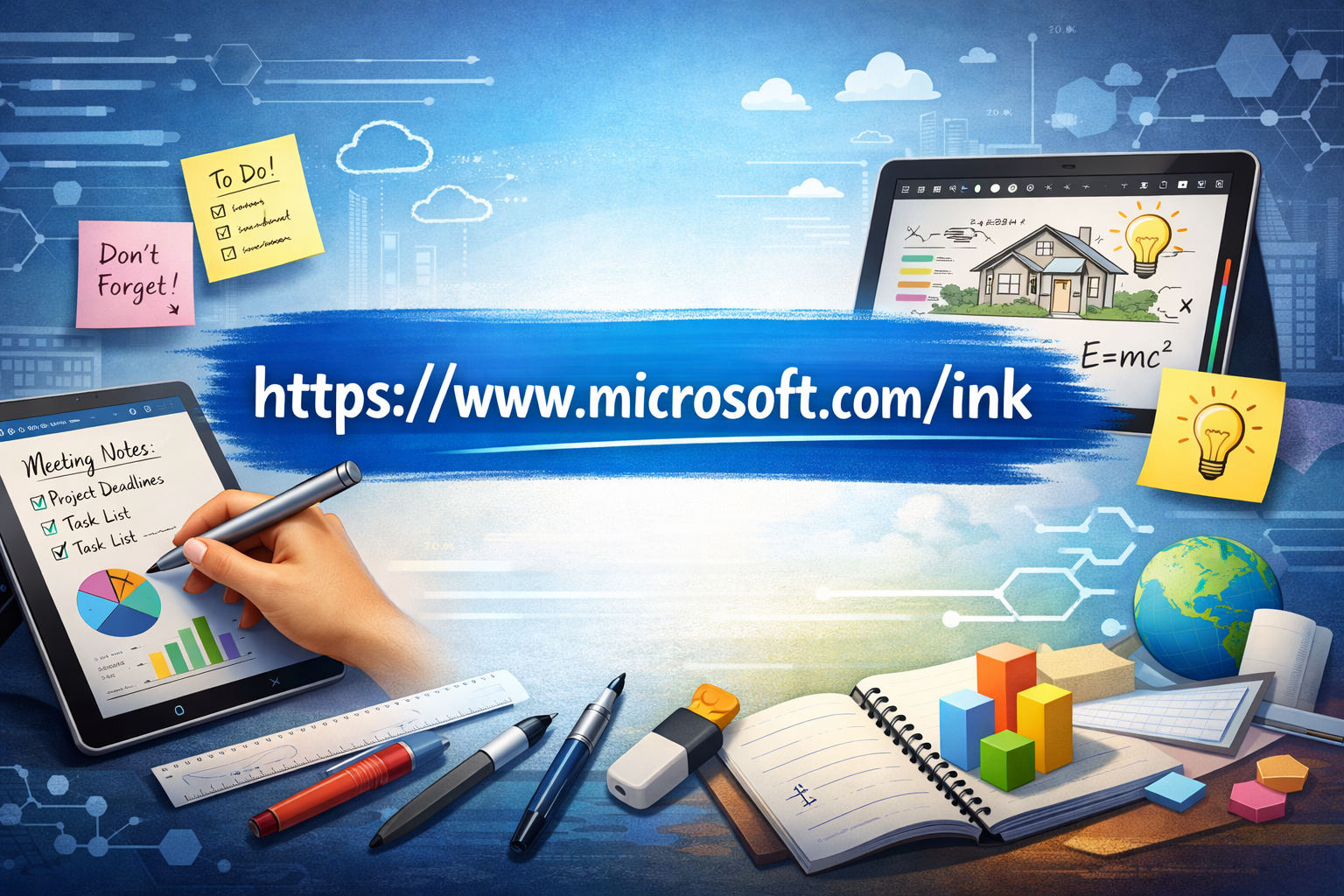
In today’s fast-paced digital world, the way we interact with technology continues to evolve. One innovation that’s transforming how we take notes, sketch ideas, and collaborate is https //www.microsoft.com /ink, Microsoft’s comprehensive digital inking platform. Whether you’re a student scribbling notes during lectures, a designer sketching creative concepts, or a professional annotating documents during meetings, Microsoft Ink brings the natural feel of pen and paper into the digital realm. This technology isn’t just about replacing your physical notepad—it’s about enhancing your productivity, creativity, and communication in ways traditional writing never could. Throughout this guide, we’ll explore everything you need to understand about Microsoft’s inking ecosystem, from its foundational technology to practical applications that can revolutionize your daily workflow.
Quick Bio
| Attribute | Details |
|---|---|
| Product Name | Microsoft Ink |
| Developer | Microsoft Corporation |
| Initial Launch | October 26, 2016 (Windows Ink Workspace) |
| Latest Major Update | Windows 11 integration (October 2021) |
| Supported Platforms | Windows 10, Windows 11, Surface devices, compatible tablets |
| Primary Purpose | Digital handwriting, sketching, and annotation platform |
| Key Applications | Sticky Notes, Sketchpad, Screen Sketch, OneNote, Whiteboard |
| Hardware Compatibility | Surface Pen, compatible active styluses, touchscreen devices |
| Target Users | Students, professionals, artists, educators, designers |
| Official Website | microsoft.com/ink |
What Is Microsoft Ink and Why Does It Matter?
Microsoft Ink represents a fundamental shift in how we interact with our computers and tablets. Rather than relying solely on keyboards and mice, this technology enables users to write, draw, and create using a digital pen with remarkable precision and responsiveness. The platform integrates seamlessly across Windows devices, particularly shining on Surface tablets and other touchscreen-enabled computers.
READ MORE: Unbanned G+: Origins, Controversies, and Digital Legacy
The significance of this technology extends beyond mere convenience. Studies have shown that handwriting activates different parts of the brain compared to typing, often leading to better retention and comprehension of information. Microsoft recognized this neurological advantage and built an entire ecosystem around preserving the benefits of handwriting while adding the power of digital tools. When you use https //www.microsoft.com /ink, you’re not just writing on a screen—you’re accessing intelligent features like handwriting recognition, shape correction, and instant searchability across all your notes.
What makes Microsoft’s approach particularly compelling is the thoughtful integration across their software suite. Your handwritten notes in OneNote can be converted to text, searched instantly, and synced across all your devices. Sketches in Whiteboard can be shared in real-time with colleagues across the globe. Annotations in Edge browser remain exactly where you placed them, ready for reference during your next browsing session. This interconnected experience transforms scattered thoughts into organized, actionable information.
The Technology Behind Digital Inking
Understanding the technology powering Microsoft Ink helps appreciate why it feels so natural compared to earlier digital writing experiences. At its core, the system relies on precise pressure sensitivity, tilt detection, and remarkably low latency to create an experience that closely mimics traditional pen and paper.
Modern Surface Pens, for instance, feature 4,096 levels of pressure sensitivity. This means the device can detect incredibly subtle variations in how hard you press, translating that into thicker or thinner lines just like a real pen. The tilt functionality adds another dimension, allowing you to shade drawings by angling your pen, exactly as you would with a pencil on paper. These hardware capabilities are matched by sophisticated software algorithms that predict your next stroke, reducing perceived lag to nearly imperceptible levels.
The ink rendering engine processes your input at incredibly high speeds, often completing the stroke before you’ve even finished the motion. This predictive technology analyzes your writing pattern and anticipates where your pen is heading, creating a fluid experience that feels responsive and immediate. Microsoft has invested heavily in reducing latency across multiple hardware generations, with current Surface devices achieving response times under 21 milliseconds—faster than the human eye can typically perceive.
Beyond the basic writing experience, Microsoft Ink incorporates intelligent recognition systems. The handwriting recognition engine can understand cursive, print, and various writing styles across multiple languages. It doesn’t just convert text character by character; it analyzes context, understands common word patterns, and even learns your personal writing quirks over time to improve accuracy.
Core Applications Within the Microsoft Ink Ecosystem
The Windows Ink Workspace serves as your central hub for digital inking, providing quick access to essential applications designed specifically for pen input. Understanding each component helps you leverage the full potential of the platform.
Sticky Notes represents the digital evolution of those colorful paper squares we’ve all stuck on our monitors. But these aren’t your grandmother’s sticky notes. They sync across all your Windows devices and can even appear on your phone through Microsoft Launcher. Write a quick reminder on your Surface, and it appears on your desktop at work. The application recognizes phone numbers, addresses, and dates, offering to create calls, map directions, or calendar appointments with a single tap. This intelligent interpretation transforms casual jottings into actionable information without additional effort.
Sketchpad provides a blank canvas for your creativity, whether you’re doodling during a brainstorming session or creating detailed technical diagrams. The application includes a ruler tool for perfectly straight lines, a protractor for precise angles, and various pen types with customizable colors and thicknesses. While it may seem simple compared to professional art software, Sketchpad excels at quick ideation and informal sketching. Many professionals keep it open during video calls for explaining concepts visually or working through problems collaboratively.
Screen Sketch revolutionizes how we capture and annotate screenshots. Rather than taking a static image and opening separate editing software, you can grab a screenshot and immediately mark it up with highlights, arrows, notes, or freehand drawings. This proves invaluable for providing feedback on designs, highlighting important information in documents, or creating quick tutorials. The marked-up images can be saved, shared via email, or pasted directly into other applications, streamlining workflows that previously required multiple steps.
Microsoft OneNote: The Flagship Inking Experience
While the Windows Ink Workspace offers excellent quick-access tools, OneNote represents the pinnacle of Microsoft’s inking vision. This digital notebook application transforms how we organize information, combining the flexibility of handwriting with the power of digital search and organization.
OneNote’s inking capabilities extend far beyond simple note-taking. You can write equations that OneNote solves automatically, draw shapes that snap into perfect geometric forms, and create diagrams with connectors that maintain relationships when elements are moved. The application treats handwritten notes as searchable text, meaning you can find specific words or phrases across hundreds of pages of handwritten content in seconds. This searchability alone justifies the transition from paper notebooks for many users.
The organizational structure of OneNote mirrors physical notebooks with sections and pages, but without space limitations. Create separate notebooks for different projects, classes, or areas of your life. Within each notebook, organize information hierarchically with sections and subsections. Tag important notes for easy retrieval later. Insert images, audio recordings, web clippings, and file attachments alongside your handwritten notes, creating a comprehensive information repository that traditional notebooks could never match.
Collaboration features transform OneNote into a shared thinking space. Multiple users can write on the same page simultaneously, with each person’s contributions appearing in different colors. This capability shines during team brainstorming sessions, study groups, or collaborative planning meetings. Changes sync in real-time, ensuring everyone sees the latest version regardless of their location or device.
Integration with Professional Applications
Microsoft hasn’t limited inking to dedicated note-taking apps. The technology permeates their professional software suite, enhancing productivity across various workflows. Understanding these integrations helps you discover unexpected ways to incorporate pen input into your daily work.
Microsoft Edge browser includes comprehensive inking support, allowing you to annotate web pages, PDFs, and ebooks directly. Research papers can be highlighted and marked up as if printed on paper, except your annotations remain permanently attached to the digital document. Save annotated pages as PDFs to preserve your notes when sharing with colleagues or returning for future reference. This feature particularly benefits students and researchers who frequently work with online academic materials.
PowerPoint presentations come alive when you can draw directly on slides during delivery. Emphasize key points with circles or arrows, underline important statistics, or sketch additional diagrams to clarify complex concepts. In presentation mode, your annotations appear to the audience but don’t permanently modify the original slides unless you choose to keep them. This freedom to improvise visual explanations based on audience questions creates more engaging, responsive presentations.
Microsoft Whiteboard deserves special recognition as perhaps the most collaborative inking application in the suite. Designed specifically for team ideation and planning, Whiteboard provides an infinite canvas where multiple participants can contribute simultaneously. The application includes templates for common business activities like brainstorming, SWOT analysis, and project planning. Handwritten notes, typed text, images, and sticky notes coexist naturally, creating rich visual representations of complex ideas. Teams working remotely have found Whiteboard invaluable for recreating the spontaneity and creativity of in-person whiteboard sessions.
Hardware Considerations and Compatibility
While Microsoft Ink works with various styluses and touchscreen devices, the experience varies considerably based on your hardware choices. Understanding these differences helps set realistic expectations and guides purchasing decisions if you’re considering investing in inking-capable devices.
Surface Pen represents the gold standard for Microsoft Ink experiences. Specifically designed for Surface devices, these pens offer the lowest latency, most precise pressure sensitivity, and tightest integration with Windows features. The latest iterations include haptic feedback, providing subtle vibrations that mimic the sensation of writing on paper. A magnetic attachment keeps the pen conveniently attached to your device when not in use. The tail button serves as an eraser, matching the familiar interaction pattern of traditional pencils.
Third-party active styluses work with many Windows tablets and touchscreen laptops, though performance varies. Look for pens using either Microsoft Pen Protocol or Wacom AES technology for best compatibility. These alternatives often cost less than official Surface Pens while providing acceptable performance for casual users. However, they may lack advanced features like tilt sensitivity, haptic feedback, or button customization. Reading reviews specific to your device model helps identify compatible options that meet your needs.
Passive styluses, those simple rubber-tipped pens requiring no batteries or charging, work for basic touch input but don’t provide true inking experiences. They lack pressure sensitivity, precise tip accuracy, and palm rejection capabilities. While suitable for simple navigation or casual drawing, they can’t deliver the nuanced control serious note-takers or artists require.
Practical Applications Across Different Professions
The versatility of https //www.microsoft.com /ink becomes apparent when examining how different professionals incorporate the technology into their workflows. These real-world applications demonstrate value beyond theoretical capabilities.
Educators have embraced digital inking for creating more engaging lessons. Math teachers work through complex equations step-by-step, saving the worked examples for students to review later. History instructors annotate maps and timelines during discussions, building visual narratives that help students understand connections between events. The ability to save and share these annotated lessons creates study resources that weren’t practical with traditional chalkboards or whiteboards. Student engagement often increases when they see ideas developing visually rather than simply reading static slides.
Healthcare professionals use inking for patient diagrams, annotating medical images, and quick documentation during examinations. A physician can sketch the location of an injury on a body diagram, circle areas of concern on an X-ray, or diagram a surgical procedure for patient education. These visual aids improve patient understanding while creating documentation that becomes part of the medical record. The digital nature ensures these important visual communications aren’t lost like paper sketches often were.
Architects and designers appreciate the ability to sketch initial concepts digitally, then refine them using professional software. Early ideation often flows better with pen and paper than formal CAD tools, but paper sketches must be digitized later. Digital inking eliminates this duplication, allowing quick sketches to serve as starting points for detailed development. Markup and review sessions become more efficient when stakeholders can annotate plans directly rather than describing desired changes verbally or via email.
Business professionals find inking invaluable during meetings and brainstorming sessions. Rather than typing minutes that interrupt conversational flow, handwritten notes capture ideas quickly without distraction. The natural feel of writing helps maintain engagement with discussion rather than focusing on keyboard mechanics. Mind maps, flowcharts, and organizational diagrams emerge spontaneously, with the flexibility to move and reorganize elements as ideas evolve. These visual artifacts become shared references that teams can refine collaboratively.
Comparison: Digital Inking vs Traditional Note-Taking
| Aspect | Microsoft Ink | Traditional Paper |
|---|---|---|
| Searchability | Instant search across all handwritten notes | Manual review required |
| Organization | Infinite pages, digital sections, automatic syncing | Limited by physical notebook size |
| Sharing | Real-time collaboration, instant digital sharing | Requires scanning or photographing |
| Editing | Erase, move, resize, and reorganize easily | Limited to crossing out or rewriting |
| Backup | Automatic cloud backup and version history | Risk of loss or damage |
| Cost | Initial hardware investment, minimal ongoing costs | Continuous purchase of notebooks and pens |
| Battery | Requires charged device | No power needed |
| Feel | Very close to paper, slight learning curve | Completely natural |
Tips for Maximizing Your Microsoft Ink Experience
Getting started with digital inking is straightforward, but mastering the platform requires understanding several optimization strategies. These techniques help you work more efficiently and discover capabilities you might otherwise overlook.
Customize your pen settings to match your writing style and preferences. Windows allows you to define which hand you write with, ensuring palm rejection works correctly. Adjust the pen button functions to trigger your most frequent actions—many users set the barrel button to activate screenshot tools or open OneNote for quick note capture. Experiment with different pressure curves if your device supports this customization; some people prefer lighter or firmer touch responses than factory defaults provide.
Learn keyboard shortcuts that complement pen input rather than replacing it. While inking excels for freeform content creation, certain tasks remain faster with keyboard commands. Switch between pen types, undo mistakes, or create new pages without lifting your pen to tap screen buttons. This hybrid approach—using the right input method for each task—maximizes efficiency beyond either method alone.
Organize your digital notebooks thoughtfully from the beginning. Establish naming conventions for notebooks, sections, and pages that make sense for how you’ll search and reference content later. Use tags consistently to mark action items, important information, or items requiring follow-up. This organizational discipline pays dividends when you have months or years of accumulated notes and need to find specific information quickly.
Explore the intelligent features beyond basic writing. Math equation solving in OneNote can check your work or help you understand problem-solving steps. Shape recognition converts rough sketches into perfect geometric forms. Handwriting conversion to text enables you to write naturally then share typed versions with others who might struggle reading handwriting. These capabilities transform inking from mere digital transcription into augmented thinking tools.
Troubleshooting Common Inking Issues
Even with robust technology, users occasionally encounter problems that interfere with their inking experience. Understanding common issues and their solutions helps you maintain productivity when technical hiccups occur.
Palm rejection problems top the list of user complaints. If your device registers your palm as input while writing, check your hand orientation settings in Windows. Ensure you’ve specified which hand you write with correctly. Some applications offer additional palm rejection settings beyond system-level controls. Update your device drivers and Windows version, as Microsoft continually improves palm rejection algorithms with software updates. Physical technique matters too—try adjusting how you rest your hand on the screen or consider a screen protector designed to enhance palm rejection.
Pen responsiveness issues often stem from battery problems, outdated drivers, or interference. Replace pen batteries regularly, as weak batteries cause erratic behavior before dying completely. Update your pen firmware and device drivers through Windows Update or manufacturer support sites. Remove any magnetic accessories near where you write, as they can interfere with the pen’s digitizer signals. If problems persist after these steps, the pen itself may require replacement.
Handwriting recognition accuracy improves through training but sometimes requires troubleshooting. If OneNote or other applications consistently misinterpret your writing, check your language settings to ensure they match how you write. The handwriting training tool in Windows Settings allows you to provide samples of your writing style, improving recognition accuracy across all applications. Write more clearly and deliberately when accuracy matters critically—the recognition engine performs better with consistent, well-formed letters than rushed scribbles.
Privacy and Security Considerations
As with any cloud-connected technology, understanding privacy implications helps you use Microsoft Ink responsibly and securely. Microsoft has implemented various protections, but users must also take appropriate precautions with their data.
Handwritten notes sync through OneDrive by default, providing accessibility across devices but raising questions about data storage and access. Microsoft encrypts data in transit and at rest, protecting against interception or unauthorized access to their servers. However, anyone with access to your Microsoft account can view your synced notes. Enable two-factor authentication, use strong unique passwords, and sign out of shared devices to protect your information.
Handwriting can be personally identifiable, almost like a fingerprint. If privacy concerns include hiding your identity, be aware that handwriting analysis could potentially identify you from your notes. This consideration matters particularly for sensitive professional contexts or situations involving confidential information. Typed notes provide more anonymity than handwritten ones if this concern applies to your situation.
Review sharing settings carefully when collaborating on notebooks or whiteboards. Default sharing permissions may grant more access than intended. Understand the difference between view-only, comment, and edit permissions. Regularly audit who has access to shared content and revoke access when collaboration concludes. These practices prevent unintended information disclosure and maintain control over your intellectual property.
The Future of Digital Inking
Microsoft continues investing in inking technology, with innovations suggesting exciting possibilities for future development. Understanding these trends helps anticipate how the platform might evolve and influence your long-term technology decisions.
Artificial intelligence integration is expanding beyond simple handwriting recognition. Future versions may analyze your notes to automatically create tasks, identify key concepts, or generate summaries of lengthy meeting notes. Imagine OneNote suggesting relevant information from past notes while you write about a new but related topic, creating connections you might not have recognized consciously. These intelligent assistants could transform passive note repositories into active knowledge management systems.
Augmented reality applications represent another frontier. Microsoft’s HoloLens already supports inking in three-dimensional space. As mixed reality technology matures and becomes more accessible, we might sketch directly onto physical objects, create spatial diagrams floating in the air, or collaborate with remote colleagues in shared virtual spaces. These capabilities would extend digital inking beyond screens into our physical environment.
READ MORE: 5starsstocks .com Explained: Features, Insights, and Value
Cross-platform expansion continues steadily. While historically Windows-centric, Microsoft has brought inking capabilities to iPad versions of their applications and improved Android support. This broader compatibility acknowledges that many users work across multiple devices and platforms. Expect continued refinement of these experiences as Microsoft balances platform-specific optimization with cross-device consistency.
Conclusion
Microsoft Ink represents far more than digital handwriting—it’s a comprehensive ecosystem that preserves the cognitive benefits and natural feel of pen and paper while adding powerful digital capabilities impossible with physical notebooks. From quick sticky notes to complex collaborative whiteboards, from casual sketching to professional annotations, https //www.microsoft.com /ink enhances productivity across countless scenarios and professions. The technology has matured to the point where latency, pressure sensitivity, and recognition accuracy rival or exceed traditional writing in many contexts. Whether you’re a student organizing class notes, a professional collaborating on projects, or a creative sketching ideas, digital inking offers compelling advantages worth exploring. Start with the built-in Windows Ink Workspace, experiment with different applications to find what fits your workflow, and gradually incorporate more advanced features as you discover their value. The transition to digital inking might feel unfamiliar initially, but the long-term benefits in organization, searchability, and collaboration make it a worthwhile investment in your productivity and creativity.
Frequently Asked Questions (FAQs)
What devices support Microsoft Ink functionality?
Microsoft Ink works with any Windows 10 or Windows 11 touchscreen device that supports active pen input. Surface devices provide the best experience, but compatible tablets and laptops from manufacturers like HP, Dell, and Lenovo also support the platform with appropriate styluses.
Can I use Microsoft Ink without a special pen?
While you can perform basic touch input with your finger, true inking capabilities require an active stylus that supports pressure sensitivity and palm rejection. Simple passive styluses lack the precision and features needed for comfortable extended writing or drawing.
Are my handwritten notes searchable across all applications?
OneNote provides the most comprehensive handwriting search functionality, recognizing text within your handwritten notes across all notebooks. Other applications have varying levels of search support, but OneNote remains the primary application for searchable handwritten content.
Does Microsoft Ink work offline?
Yes, all core inking functionality works without internet connection. You can write, draw, and annotate completely offline. Cloud sync features require connectivity, but local use continues seamlessly without network access, syncing automatically when connection is restored.
How accurate is the handwriting recognition technology?
Recognition accuracy depends on writing clarity and language complexity but typically exceeds 95% for reasonably legible handwriting in supported languages. The system improves with use as it learns your writing patterns, and you can train it with samples to enhance accuracy further.
-

 Blogs1 week ago
هنتاوي.com: A Deep Look Into Its Culture and Impact
-

 Blogs1 week ago
Mutmax: Comprehensive Guide to the Woodworking Powerhouse Brand
-

 Blogs1 week ago
Suçculent Plants Explained: Care, Meaning, and Uses
-

 Digital Marketing1 day ago
Blogsternation .com: A Complete Guide to the Platform
-

 Blogs1 week ago
Masgonzola: A Deep Dive Into Flavor, Craft, and Culture
-

 Blogs1 week ago
Lakede: Understanding Lakes, Life, and Sustainable Development
-
 Tech1 week ago
Matoketcs Explained: Meaning, Uses, and Modern Relevance
-

 Digital Marketing1 day ago
SEO by HighSoftware99.com: Complete Strategy Guide