Education
Western Band Association: Powering Marching Excellence

Introduction
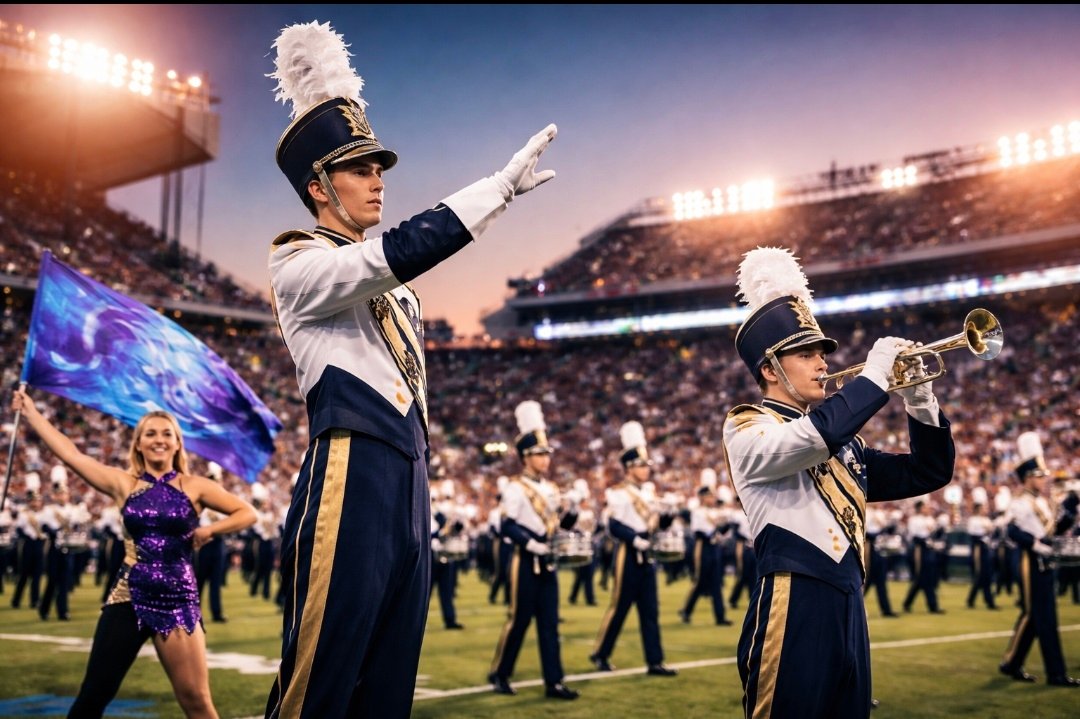
Across football fields, parade routes, and championship stadiums in the western United States, a particular standard of musical excellence has quietly shaped generations of student performers. That standard is upheld by the western band association, an organization that has become synonymous with competitive marching band culture on the West Coast. For students who dedicate countless after-school hours to rehearsal, for directors who meticulously craft drill designs and musical programs, and for families who fill bleachers with applause and pride, the western band association represents far more than a calendar of competitions. It is a community, a benchmark of quality, and a driving force behind artistic and personal growth.
While marching band is often viewed as a high school activity, the ecosystem surrounding it is sophisticated and deeply organized. Adjudication standards, classification systems, event logistics, safety regulations, and educational philosophy all play a role in shaping the experience. The western band association has built a structure that balances competition with education, spectacle with discipline, and tradition with innovation. Understanding its influence requires looking beyond halftime shows and trophies to the educational framework and cultural legacy that define its role in the performing arts landscape.
What Is Western Band Association
The western band association is a nonprofit governing body that organizes, regulates, and adjudicates marching band and auxiliary competitions primarily in California and neighboring western states. Established in the mid-20th century, it was created to bring consistency and fairness to band competitions that were once informal and loosely coordinated. Over time, it evolved into one of the most respected regional circuits in the United States for scholastic marching ensembles.
READ MORE: vçç: Hidden Layers of a Digital Mystery Code UncoveredDeeply
At its core, the western band association provides a structured competitive environment for high school marching bands, color guards, drum majors, and percussion units. It sets judging criteria, trains adjudicators, establishes classification systems based on school size or band membership, and hosts a season of events culminating in championship competitions. Yet its purpose extends beyond ranking performances. The association emphasizes education, musical growth, leadership development, and sportsmanship, aiming to cultivate well-rounded students through the discipline of performance.
Today, the western band association operates with a comprehensive governance model that includes a board of directors, adjudication panels, and committees responsible for rules, safety, and event coordination. Its influence touches thousands of students annually, shaping rehearsal practices, show design trends, and performance standards across the region.
Historical Foundations and Growth
The origins of the western band association reflect a period when marching bands were expanding rapidly in American schools. Post-World War II growth in public education led to larger student populations and increased funding for arts programs. With that expansion came a desire for organized competition. Early band festivals were often local and informal, judged by community musicians or educators with varying criteria. Inconsistencies in scoring and classification created confusion and frustration.
The formation of the western band association addressed these concerns. By standardizing rules and adjudication rubrics, the organization created a level playing field. Bands could now compare their work against consistent criteria, and directors gained clearer feedback to improve instruction. Over the decades, the association refined its evaluation system, introducing detailed scoring sheets that measure musical performance, visual performance, general effect, and auxiliary components.
As the competitive landscape matured, so did the artistic ambition of participating ensembles. Drill designs became more intricate. Musical selections expanded beyond traditional marches to include symphonic transcriptions, contemporary compositions, and thematic storytelling. The western band association adapted to these changes, updating its rules to accommodate evolving performance styles while maintaining educational integrity.
Organizational Structure and Governance
The western band association operates with a clear governance structure designed to ensure transparency and educational focus. It is typically led by a board composed of experienced band directors and stakeholders who understand the demands of scholastic performance. These leaders oversee rule changes, adjudicator training, and event scheduling.
A critical aspect of the organization is its adjudication system. Judges are not randomly selected musicians; they undergo training and calibration to ensure consistent scoring across events. This process involves workshops, performance analysis sessions, and regular evaluation of judging accuracy. Such attention to adjudicator preparation reinforces trust in the competitive process.
The association also maintains classification divisions, often based on school enrollment or band size. This approach prevents smaller programs from being overshadowed by large, resource-rich schools. By grouping bands into comparable categories, the western band association fosters healthy competition and encourages growth at every level.
Behind the scenes, logistical planning is extensive. Each event requires coordination of stadium facilities, sound systems, timing officials, safety protocols, and volunteer support. The organizational complexity underscores that the western band association is not merely a scoring entity but a comprehensive operational framework.
Educational Philosophy and Student Development
Although trophies and rankings capture public attention, the deeper mission of the western band association centers on education. Marching band is uniquely positioned at the intersection of music, movement, leadership, and teamwork. Students learn time management, discipline, and collaboration under high-pressure conditions. They experience firsthand the rewards of persistence and the necessity of accountability.
The competitive season typically spans several months, requiring sustained commitment. Students memorize music, refine technique, and rehearse visual formations repeatedly. Directors often align their curriculum with the standards set by the western band association, ensuring that rehearsal objectives mirror adjudication expectations. This alignment transforms competitions into educational milestones rather than isolated performances.
Leadership development is another cornerstone. Drum majors, section leaders, and captains gain real-world management experience. They motivate peers, resolve conflicts, and maintain morale during demanding rehearsal schedules. In this way, the western band association indirectly nurtures future educators, performers, and professionals across diverse fields.
The Adjudication System and Competitive Standards
One of the defining features of the western band association is its detailed adjudication system. Performances are evaluated across multiple captions that typically include music performance, visual performance, and general effect. Auxiliary units such as color guard and percussion may receive separate assessments.
Music judges analyze tone quality, intonation, rhythmic accuracy, balance, and interpretive expression. Visual judges assess marching technique, alignment, spacing, and the clarity of drill execution. General effect judges evaluate the emotional impact and cohesiveness of the overall production. Each caption carries weighted value, contributing to a final composite score.
What distinguishes the western band association is its emphasis on constructive feedback. Judges provide written and recorded commentary, offering directors and students actionable insights. Rather than focusing solely on numerical rankings, the system prioritizes growth. Many directors consider these critiques invaluable educational tools that shape program development year after year.
Championship Events and Cultural Impact
The culmination of the competitive season often arrives in the form of regional or state championships organized by the western band association. These events draw large audiences and represent months of preparation. For many students, performing at championships is a defining high school memory.
The atmosphere at these events is electric yet respectful. Bands cheer for one another, demonstrating a culture of sportsmanship reinforced by the association’s values. Rivalries exist, but they are framed within mutual admiration for dedication and artistry.
Culturally, the western band association has elevated marching band from a halftime tradition to a theatrical spectacle. Productions frequently incorporate narrative themes, elaborate costuming, and sophisticated musical arrangements. The association’s standards have encouraged innovation, pushing directors to explore creative storytelling while maintaining technical rigor.
Financial and Logistical Considerations
Operating a competitive marching band program involves significant financial investment. Instruments, uniforms, transportation, show design, and staffing costs can be substantial. The western band association plays a role in establishing entry fees, event structures, and scheduling that influence budgeting decisions.
While the organization does not directly fund programs, its framework creates opportunities for fundraising and community engagement. Competitions hosted by member schools often generate revenue through ticket sales and concessions. This reciprocal system allows schools to offset costs while contributing to the broader circuit.
Safety and compliance are also central logistical concerns. The western band association enforces timing rules, field boundaries, and equipment regulations to ensure fairness and protect participants. Such oversight minimizes risks and maintains professional standards across events.
Influence on West Coast Marching Style
Over time, distinct regional characteristics have emerged within American marching band culture. The western band association has significantly shaped what many describe as the “West Coast style.” This approach often emphasizes musical nuance, fluid visual transitions, and thematic cohesion.
Unlike purely militaristic marching traditions, West Coast ensembles frequently prioritize artistic expression and contemporary repertoire. The western band association’s adjudication criteria reward clarity of concept and emotional communication, encouraging directors to design programs that resonate beyond technical precision.
The result is a dynamic performance culture where innovation thrives. Bands experiment with staging, choreography, and instrumentation, confident that the association’s evaluative framework supports creative risk-taking when executed with discipline.
Community, Alumni, and Long-Term Legacy
The impact of the western band association extends beyond current students. Alumni often return as instructors, adjudicators, or volunteers, sustaining a cycle of mentorship. For many, participation fosters lifelong appreciation for music and the performing arts.
Communities also benefit from the visibility of competitive events. Local economies see increased activity during competitions, and schools gain recognition for artistic achievement. The association’s long history has woven it into the cultural fabric of numerous districts.
Perhaps most importantly, the western band association has preserved a tradition of excellence while adapting to generational change. As educational priorities shift and funding landscapes evolve, the organization continues to advocate for the value of music education.
READ MORE: stormuring: The Hidden Architecture of Chaos in Complex Era
Conclusion
The western band association stands as a pillar of structured excellence in the world of scholastic marching performance. It is not simply an organizer of competitions but a guardian of educational standards, artistic integrity, and student growth. Through consistent adjudication, thoughtful governance, and a commitment to community, it has shaped decades of musical achievement across the western United States.
For students, it represents challenge and triumph.For directors, it offers clarity and professional development.For audiences, it delivers unforgettable performances that blend sound, movement, and emotion. In an era when arts programs often face uncertainty, the western band association remains a testament to what organized dedication and shared vision can accomplish.
FAQs
What does the western band association primarily do?
The western band association organizes and regulates competitive marching band events, establishes judging standards, and provides educational feedback to participating schools.
Who can participate in western band association competitions?
High school marching bands, color guards, drum majors, and percussion units primarily participate, though specific eligibility rules are defined by the association.
How are performances judged in the western band association?
Performances are evaluated across multiple categories such as music performance, visual execution, and overall effect, with trained adjudicators providing both scores and detailed commentary.
Is the western band association only focused on competition?
While competition is central to its activities, the association emphasizes education, leadership development, and artistic growth as its broader mission.
Why is the western band association influential on the West Coast?
Its standardized rules, championship events, and emphasis on creative excellence have shaped regional marching styles and established a high benchmark for performance quality.

-

 Blogs1 week ago
هنتاوي.com: A Deep Look Into Its Culture and Impact
-

 Blogs1 week ago
Mutmax: Comprehensive Guide to the Woodworking Powerhouse Brand
-

 Blogs1 week ago
Suçculent Plants Explained: Care, Meaning, and Uses
-

 Digital Marketing1 day ago
Blogsternation .com: A Complete Guide to the Platform
-

 Blogs1 week ago
Masgonzola: A Deep Dive Into Flavor, Craft, and Culture
-

 Blogs1 week ago
Lakede: Understanding Lakes, Life, and Sustainable Development
-

 Tech1 week ago
Matoketcs Explained: Meaning, Uses, and Modern Relevance
-

 Digital Marketing1 day ago
SEO by HighSoftware99.com: Complete Strategy Guide