
Business
global skills gosford wage subsidy support worker Impact


Introduction
In regional New South Wales, employment is more than a statistic. It shapes families, communities, and long-term stability. On the Central Coast, one initiative has quietly transformed how job seekers and employers connect: the global skills gosford wage subsidy support worker program. While the phrase may sound administrative at first glance, its impact is deeply personal. It bridges the gap between unemployment and opportunity, particularly for people who face barriers that most of us rarely consider.
The global skills gosford wage subsidy support worker initiative operates through employment services in Gosford, aligning with Australia’s broader workforce development strategies. It combines wage subsidies for employers with structured support for individuals seeking meaningful employment. The result is not just job placement, but structured, supported integration into the workforce.
Understanding this program requires more than a surface explanation. It involves recognizing the social and economic context of the Central Coast, the operational framework of employment service providers, and the human stories behind each placement. In a region that has experienced economic shifts, industry restructuring, and fluctuating unemployment rates, this wage subsidy model has become an essential tool for workforce participation.
The Foundation of the Program in Gosford
Gosford sits at the heart of the Central Coast of New South Wales. Historically, the region has balanced residential growth with service-based employment, retail, healthcare, and construction. However, like many regional areas, it has experienced waves of unemployment during economic downturns. Young people, mature-age workers, migrants, and individuals with disabilities have often found themselves competing in a tight job market.
READ MORE: servicio inmediato nacional: Response That Transforms Lives!
The global skills gosford wage subsidy support worker framework was designed to directly address these challenges. By offering financial incentives to employers willing to hire eligible job seekers, the program reduces the perceived risk of recruitment. Wage subsidies can offset training costs, initial productivity gaps, and onboarding expenses.
What makes the model distinctive is that it does not stop at financial support. The support worker component ensures ongoing guidance for both employer and employee. This structured support can include mentoring, workplace adjustment assistance, and regular check-ins. It transforms a simple job placement into a supported employment partnership.
How Wage Subsidies Work in Practice
At its core, the global skills gosford wage subsidy support worker system operates on a straightforward principle. Employers receive financial assistance when they hire eligible candidates who have faced employment barriers. These barriers may include long-term unemployment, disability, limited work history, or socioeconomic disadvantage.
The subsidy is not a handout. It is conditional. Employers must meet employment standards, provide appropriate training, and maintain fair workplace conditions. Payments are typically structured over time, ensuring that placements are sustained rather than short-term or superficial.
For employers in Gosford, this can mean reduced financial pressure during the first few months of employment. For job seekers, it can mean access to opportunities that might otherwise be out of reach. For the broader community, it translates into economic participation and reduced reliance on income support.
The involvement of a global skills gosford wage subsidy support worker ensures accountability. These professionals coordinate between job seekers, employers, and funding bodies. They monitor progress, resolve issues early, and support workplace integration.
The Role of Global Skills Australia
The program operates through employment service providers such as Global Skills, which delivers workforce assistance across multiple regions in New South Wales. In Gosford, their role extends beyond paperwork and compliance. They actively engage with local businesses, community groups, and training organizations to create genuine employment pathways.
Global Skills staff members often come from backgrounds in human resources, social services, or vocational training. Their approach is relationship-driven. Employers are not simply handed a candidate; they are guided through the hiring process and supported afterward.
The global skills gosford wage subsidy support worker acts as both advocate and facilitator. For job seekers who may lack confidence, interview skills, or workplace experience, this support can be transformative. For employers unfamiliar with wage subsidy schemes, it removes administrative complexity and uncertainty.
The Human Dimension Behind the Program
Statistics alone cannot capture the emotional weight of long-term unemployment. In regional communities, job loss can ripple through families. Confidence erodes. Skills become outdated. Social isolation grows.
The global skills gosford wage subsidy support worker model acknowledges that employment is not just economic; it is psychological and social. Support workers often help individuals rebuild routines, practice communication skills, and adapt to workplace expectations. They act as mentors during the fragile early weeks of employment.
There are stories of mature-age workers who had not applied for a job in decades, young people who struggled after leaving school, and migrants navigating unfamiliar workplace cultures. The wage subsidy reduces the employer’s financial hesitation, but the support worker addresses the human element.
This dual structure is what distinguishes the initiative from basic job matching services.
Regional Impact on the Central Coast Economy
When more residents gain employment, local businesses benefit. Increased household income translates into higher consumer spending within the region. The Central Coast economy, including areas surrounding Gosford, relies heavily on small and medium-sized enterprises.
By encouraging employers to hire locally through the global skills gosford wage subsidy support worker system, the program supports regional resilience. Employers who might otherwise hesitate to expand their workforce gain confidence.
The ripple effect includes reduced strain on welfare systems, greater community engagement, and long-term workforce stability. In areas where youth unemployment has historically been higher than metropolitan Sydney, structured employment initiatives make a measurable difference.
Challenges and Misconceptions
Despite its benefits, wage subsidy programs can face skepticism. Some employers worry about administrative burdens. Others question whether candidates placed through subsidy programs are sufficiently prepared.
The reality is that the global skills gosford wage subsidy support worker initiative addresses these concerns through ongoing engagement. Support workers ensure that both parties are aligned. If issues arise, they intervene early.
Another misconception is that wage subsidies create dependency. In practice, most placements aim for long-term employment beyond the subsidy period. Employers often retain workers permanently once they have proven their value.
Transparency, accountability, and relationship management are central to maintaining program integrity.
Alignment with National Workforce Strategies
The initiative operates within Australia’s broader employment services framework, including reforms introduced under Workforce Australia. These reforms aim to tailor support to individual needs rather than applying a one-size-fits-all model.
Within this national structure, the global skills gosford wage subsidy support worker model represents a localized implementation. It adapts federal policies to regional realities.
This alignment ensures funding stability and regulatory oversight, while allowing flexibility at the community level. Local labor market insights inform placement strategies, ensuring that wage subsidies target industries with genuine workforce demand.
The Support Worker’s Daily Responsibilities
The phrase global skills gosford wage subsidy support worker may appear administrative, but the role itself is highly relational. A typical day may involve meeting with employers to discuss staffing needs, preparing job seekers for interviews, and reviewing eligibility criteria for wage subsidies.
Support workers also manage documentation and compliance requirements. Government funding requires accurate reporting, and professionals in this role must balance compassion with procedural precision.
Perhaps most importantly, they maintain ongoing contact after placement. They might visit workplaces, check on performance, and offer mediation if minor conflicts arise. This hands-on involvement significantly increases retention rates.
The role demands patience, communication skills, and a deep understanding of both business and human behavior.
Long-Term Outcomes and Sustainability
Programs like global skills gosford wage subsidy support worker initiatives are most successful when they produce sustainable employment rather than temporary placements. Data from similar employment models suggests that supported wage subsidies often lead to higher retention compared to unsupported placements.
Employers who initially participate for financial reasons frequently discover the broader value of inclusive hiring. Over time, the subsidy becomes less central than the productivity and loyalty of the employee.
Sustainability also depends on continuous funding and policy support. Changes in government priorities can influence program design, but regional demand for employment services remains constant.
In Gosford, where population growth continues, workforce integration programs are likely to remain relevant for years to come.
READ MORE: satexch: The Digital Powerhouse Redefining Exchange Era Now!
Conclusion
The global skills gosford wage subsidy support worker initiative represents more than an employment scheme. It is a bridge between potential and opportunity. By combining financial incentives for employers with structured human support, it addresses both economic and psychological barriers to work.
In the evolving employment landscape of regional New South Wales, such programs offer stability. They empower individuals who might otherwise be overlooked. They strengthen local businesses. They reinforce community resilience.
Behind every wage subsidy approval form is a person seeking purpose and security. Behind every employer agreement is a willingness to invest in someone’s future. When those elements align, the result is lasting impact.
The true strength of the global skills gosford wage subsidy support worker framework lies not in policy language, but in its lived outcomes. It is a quiet but powerful force shaping employment pathways on the Central Coast.
FAQs
What is the purpose of the global skills gosford wage subsidy support worker program?
The program is designed to help eligible job seekers gain employment by offering financial incentives to employers while providing structured workplace support to ensure successful integration.
Who can benefit from the global skills gosford wage subsidy support worker initiative?
Eligible job seekers facing barriers such as long-term unemployment, disability, or limited work history can benefit, as well as employers seeking financial assistance during the hiring process.
How long does the wage subsidy last under this program?
The duration varies depending on eligibility criteria and funding arrangements, but subsidies are typically structured over a set employment period to encourage sustained placement.
Is the support worker involved after the employee is hired?
Yes, the support worker maintains contact with both employer and employee, offering guidance, monitoring progress, and resolving issues to improve retention.
Does participation guarantee permanent employment?
While permanent employment is not guaranteed, many placements continue beyond the subsidy period when the employer recognizes the employee’s value and performance.
Introduction
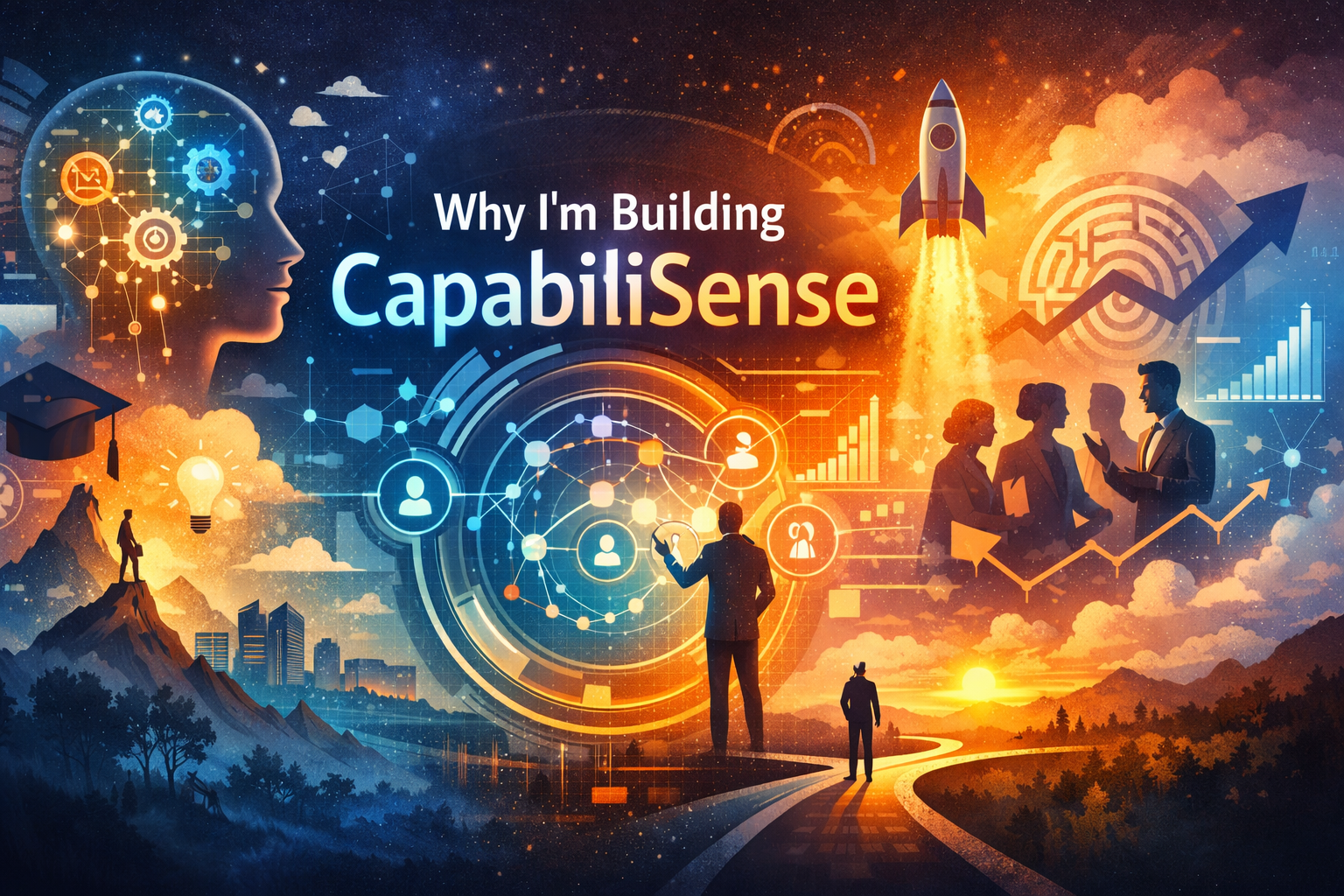
If you’ve ever felt that your potential was bigger than your circumstances, you’ll understand why im building capabilisense. We live in a world overflowing with information, tools, and opportunities—yet so many people still feel stuck, unseen, or misunderstood. Talent goes unnoticed. Capabilities remain hidden. People settle for less not because they lack ability, but because they lack clarity about what they can truly do.
This article is a deep dive into why im building capabilisense, what it stands for, and how it aims to transform the way individuals, teams, and organizations understand human capability. You’ll learn the philosophy behind it, the real-world problems it addresses, the long-term vision driving it forward, and how it can reshape education, hiring, leadership, and personal growth. This isn’t just about building a platform. It’s about building a new way of seeing people.
Quick Bio
| Field | Details |
|---|---|
| Project Name | CapabiliSense |
| Founded | 2024 |
| Founder | Independent multidisciplinary builder and researcher |
| Origin Concept | Human capability mapping and sense-making framework |
| Core Focus | Identifying, measuring, and amplifying real-world capabilities |
| Target Users | Individuals, teams, educators, founders, and organizations |
| Mission | To help people understand, express, and apply their true capabilities |
| Development Stage | Early-stage platform and framework design |
| Long-Term Vision | A global standard for capability intelligence and personal growth |
The Problem: We Don’t Truly Understand Capability
Before explaining why im building capabilisense, it’s important to understand the deeper issue. Our systems are built around credentials, titles, and surface-level metrics. We measure grades, resumes, job titles, and years of experience. But those don’t always reflect real ability.
READ MORE: Blogsternation .com: A Complete Guide to the Platform
Think about it. Two people can hold the same degree, yet perform completely differently in the real world. One thrives under pressure, adapts quickly, and solves complex problems creatively. The other struggles to apply theoretical knowledge in dynamic environments. On paper, they look equal. In reality, they are not.
We lack a structured, human-centered way to map and interpret capability. Skills are often listed, but rarely contextualized. Strengths are mentioned, but not deeply understood. Potential is talked about, but not systematically developed.
CapabiliSense is being built to close that gap.
Why Im Building CapabiliSense: A Personal Turning Point
There’s a personal reason behind why im building capabilisense. I’ve seen brilliant people underestimated simply because they didn’t fit conventional molds. I’ve watched capable founders fail—not from lack of intelligence, but from misaligned strengths. I’ve seen employees burn out because their natural capabilities were never recognized or properly deployed.
At some point, I realized the problem wasn’t motivation. It wasn’t ambition. It wasn’t even opportunity. The problem was clarity.
When people don’t understand their own capability profile, they make choices based on guesswork. They follow trends. They imitate others. They pursue paths that don’t align with how they naturally think, act, or create.
CapabiliSense began as a question: What if we could sense capability more accurately?
What Is CapabiliSense, Really?
CapabiliSense is not just a product idea. It’s a framework for understanding how people function in real-world contexts. It aims to analyze how individuals think, solve problems, collaborate, adapt, and execute.
It’s about moving beyond static labels. Instead of asking, “What degree do you have?” we ask, “How do you approach complexity?” Instead of asking, “What’s your job title?” we explore, “What environments bring out your best performance?”
This shift changes everything. It changes how we hire. It changes how we teach. It changes how we build teams. It even changes how we see ourselves.
CapabiliSense is being designed to integrate behavioral insights, performance patterns, learning velocity, and contextual intelligence into one coherent capability profile.
Reimagining Education Through Capability Awareness
Education often emphasizes memory and standardization. Students are measured by tests that reward certain cognitive styles over others. But real-world success requires adaptability, emotional intelligence, pattern recognition, and resilience.
Imagine a classroom where students understand their unique capability patterns early on. One student may excel in strategic thinking but struggle with execution. Another may be exceptional at execution but need support in big-picture planning. Instead of labeling one “smart” and the other “average,” CapabiliSense reframes both as differently capable.
This approach could help:
- Students choose more aligned career paths
- Educators design personalized learning strategies
By mapping capability rather than just performance scores, we create room for growth instead of comparison.
Transforming Hiring and Team Building
Traditional hiring often relies on resumes and interviews. Yet interviews measure confidence more than competence. Resumes measure experience more than capability.
CapabiliSense aims to offer a more structured understanding of how a person operates in practical environments. For example, someone may not have ten years of experience, but they might demonstrate extraordinary pattern recognition and fast learning cycles. That matters.
Teams also benefit from capability clarity. A startup founder might be visionary but weak in operational detail. If they understand that early, they can build a complementary team instead of duplicating strengths.
When we know what we’re good at—and what we’re not—we build smarter partnerships.
Capability vs. Skill: Understanding the Difference
One reason why im building capabilisense is the confusion between skill and capability. Skills can be learned. Capabilities are deeper patterns.
A skill is knowing how to use software. A capability is being able to learn new tools quickly under pressure. A skill is public speaking. A capability is thinking clearly in high-stakes moments.
Skills change with time and technology. Capabilities evolve, but they’re more foundational. They reflect cognitive wiring, behavioral tendencies, and decision-making style.
CapabiliSense focuses on these deeper layers. By identifying core capabilities, we create resilience. When industries shift, those with strong capability awareness adapt faster because they understand their transferable strengths.
The Psychological Impact of Being Truly Seen
There’s something powerful about being accurately understood. When someone identifies your real strengths—not just your visible achievements—it changes your confidence.
Many people carry quiet frustration. They feel underutilized. They know they can do more, but they struggle to articulate how. That internal tension leads to disengagement.
CapabiliSense aims to give language to invisible strengths. When you can name your capability pattern, you gain direction. You make choices with intention instead of imitation.
Clarity reduces anxiety. Alignment increases energy.
A Broader Vision: Capability Intelligence as Infrastructure
This isn’t just about individuals. The deeper reason why im building capabilisense is systemic. Entire industries operate inefficiently because people are misaligned with roles.
Organizations invest heavily in training, yet turnover remains high. Teams clash over differences that are actually complementary strengths misunderstood. Leaders make decisions without understanding their own blind spots.
Imagine if capability intelligence became foundational infrastructure—like financial literacy or digital literacy. Before launching a startup, founders map their capability matrix. Before forming a team, managers analyze complementary patterns. Before switching careers, professionals assess adaptability indicators.
That’s the long-term ambition. Not a tool people use once, but a framework they return to throughout life.
Real-World Scenario: A Founder’s Story
Consider a hypothetical founder named Alex. Alex is visionary and creative. He sees opportunities before others do. But his startup keeps stalling. Deadlines slip. Operations fall apart.
Alex assumes he lacks discipline. He tries productivity hacks. He works longer hours. Nothing changes.
Through a capability framework like CapabiliSense, Alex discovers something deeper: his core capability lies in ideation and strategic framing, not operational sequencing. Instead of forcing himself into a mold, he hires an operations-focused partner.
Within months, the startup stabilizes. Not because Alex changed who he was—but because he understood who he was.
That’s the shift.
The Long-Term Impact on Society
If we scale this thinking, the societal implications are profound. Imagine a generation that understands its capability profiles before entering the workforce. Career switches become intentional rather than reactive. Burnout decreases because alignment increases.
Companies reduce mismatches. Education becomes adaptive. Entrepreneurship becomes more strategic.
We often talk about productivity, innovation, and growth. But those outcomes depend on capability alignment. When the right people apply the right strengths in the right contexts, exponential impact follows.
That’s the deeper reason why im building capabilisense. It’s not about technology alone. It’s about unlocking latent human potential at scale.
Challenges in Building CapabiliSense
Building something like this isn’t simple. Human behavior is complex. Measuring capability requires nuance. There’s a risk of oversimplification.
One major challenge is avoiding rigid labeling. CapabiliSense must remain dynamic. Capabilities shift with experience and environment. The framework must reflect that evolution.
Another challenge is trust. People need to feel safe sharing behavioral data. Transparency and ethical design are non-negotiable.
Finally, there’s the challenge of integration. For CapabiliSense to matter, it must fit into real workflows—education systems, hiring processes, team management structures.
These challenges are real. But they’re worth solving.
A Future Where People Choose Based on Clarity
Imagine being 18 years old and understanding how you process risk, how you handle uncertainty, how you learn best, and where your natural energy flows. Career decisions become clearer.
Imagine being 35 and reassessing your capability evolution. You see that your decision-making speed has increased. Your tolerance for ambiguity has grown. You pivot confidently.
Imagine being 50 and mentoring others with deep awareness of your own capability journey.
That’s the world CapabiliSense envisions. A world where self-awareness is structured, not accidental.
READ MORE: SEO by HighSoftware99.com: Complete Strategy Guide
Conclusion
The journey behind why im building capabilisense is rooted in a simple but powerful belief: people are more capable than our current systems recognize. We’ve built structures that measure surface indicators, but we’ve neglected deeper capability intelligence.
CapabiliSense aims to change that. By helping individuals understand their core patterns, align with roles that amplify their strengths, and build complementary partnerships, it opens the door to more intentional growth. It has implications for education, entrepreneurship, leadership, and personal development.
The key takeaway is this: clarity precedes impact. When you understand how you’re wired, you make better decisions. When teams understand collective capability, they perform better. When systems prioritize alignment, society benefits.
The work is ambitious. The challenges are real. But the potential is enormous. And that’s exactly why im building capabilisense.
Frequently Asked Questions (FAQs)
1. What is CapabiliSense in simple terms?
CapabiliSense is a framework and developing platform designed to identify and map real-world human capabilities beyond resumes and test scores. It focuses on how people think, adapt, and perform in context.
2. Why im building capabilisense instead of a traditional startup?
The goal is deeper than launching a product. It’s about reshaping how we understand capability across education, hiring, and leadership systems.
3. Who can benefit from CapabiliSense?
Individuals seeking clarity, founders building teams, educators designing learning paths, and organizations aiming for better alignment can all benefit from capability insights.
4. How is capability different from skill?
Skills are learned abilities like coding or writing. Capability reflects deeper patterns such as problem-solving style, adaptability, and decision-making under pressure.
5. Is CapabiliSense meant for individuals or companies?
Both. Individuals gain self-awareness, while companies gain better team alignment and role placement. The framework is designed to scale across personal and organizational use.
Leadership is not born in isolation—it is nurtured, challenged, and refined through experience, mentorship, and structured growth. The eastern leadership centre stands as a dynamic institution dedicated to cultivating capable, ethical, and forward-thinking leaders across diverse sectors. Whether you’re an aspiring executive, a public servant, or an organizational strategist, understanding what the eastern leadership centre represents can transform the way you approach influence and impact.
In this comprehensive guide, you’ll discover the history, mission, programs, philosophy, and real-world significance of the eastern leadership centre. You’ll also explore how it shapes professionals across industries, why it matters in today’s evolving global landscape, and how individuals and organizations can benefit from its structured approach to leadership excellence.
Quick Bio
| Field | Details |
|---|---|
| Name | Eastern Leadership Centre |
| Founded | 2005 |
| Headquarters | Eastern Region (Multi-location operations across Asia-Pacific) |
| Founder(s) | Consortium of leadership educators and organizational development experts |
| Core Focus | Leadership training, executive education, organizational transformation |
| Program Types | Executive programs, youth leadership, corporate workshops, public sector development |
| Delivery Model | In-person seminars, hybrid learning, online leadership programs |
| Target Audience | Corporate leaders, entrepreneurs, public administrators, students |
| Mission | To cultivate ethical, adaptive, and globally competent leaders |
| Notable Strength | Cross-cultural leadership development and experiential learning frameworks |
The Vision and Philosophy Behind the Eastern Leadership Centre
The eastern leadership centre was built on a simple but powerful idea: leadership must evolve with society. In a world defined by rapid technological change, global interconnection, and social complexity, traditional leadership models are no longer enough.
READ MORE: Kora Live: The Ultimate Guide to Live Football Streaming
At its core, the centre emphasizes adaptive leadership. This means leaders must be resilient, emotionally intelligent, and capable of navigating uncertainty without losing ethical grounding. Rather than promoting rigid hierarchies, the institution encourages collaborative influence and shared accountability.
The philosophy combines Eastern values—such as collective responsibility, harmony, and reflective decision-making—with modern global leadership frameworks. This balanced approach ensures leaders develop both strategic sharpness and human-centered wisdom.
The result? Graduates who lead with confidence, clarity, and conscience.
Why Leadership Development Matters More Than Ever
Leadership is no longer limited to corner offices or government chambers. It shapes startups, nonprofit initiatives, educational institutions, and community movements. When leadership fails, systems suffer. When it thrives, innovation flourishes.
The eastern leadership centre recognizes several modern realities:
- Organizations face constant disruption.
- Teams are increasingly multicultural.
- Employees demand purpose-driven leadership.
- Ethical accountability is under public scrutiny.
Strong leadership is now about influence rather than authority. It’s about listening as much as directing. It’s about fostering growth in others.
For example, during global economic instability, companies led by adaptable executives consistently outperform rigid, control-focused organizations. Leaders trained in adaptive thinking, crisis management, and emotional intelligence make smarter decisions under pressure.
This is precisely where structured leadership development becomes essential.
Core Programs Offered by the Eastern Leadership Centre
The eastern leadership centre delivers programs tailored to different stages of professional growth. Rather than offering one-size-fits-all training, it creates layered pathways for development.
Executive Leadership Programs
These programs target senior professionals and C-suite executives. Participants explore advanced strategy, change management, corporate governance, and stakeholder engagement.
Workshops are immersive. Case studies reflect real-world scenarios, often drawn from multinational corporations and public sector institutions. Participants don’t just learn theory—they apply frameworks to complex leadership challenges.
Executives often describe these programs as transformative because they reshape how they perceive power, responsibility, and influence.
Youth and Emerging Leaders Programs
Future leaders need early exposure to structured development. The centre runs youth leadership initiatives for university students and young professionals.
These programs focus on:
- Communication mastery
- Ethical decision-making
- Cultural intelligence
- Project-based collaboration
By instilling leadership habits early, the eastern leadership centre helps individuals build confidence before entering competitive professional environments.
Corporate and Organizational Workshops
Companies often partner with the centre for customized leadership development. These workshops align with corporate goals, internal challenges, and industry demands.
For example, a technology company facing rapid scaling might require agile leadership training. A public service agency may prioritize ethical governance and transparency. Tailored programs ensure relevance and measurable outcomes.
The Unique Learning Model: Experiential and Reflective
Unlike traditional lecture-based training, the eastern leadership centre emphasizes experiential learning. Participants engage in simulations, group challenges, role-play exercises, and live case analysis.
Why does this matter?
Because leadership cannot be mastered through passive listening. It requires action, reflection, feedback, and recalibration.
The centre integrates three essential components into its methodology:
- Experience: Real-world simulations and collaborative exercises.
- Reflection: Structured journaling and peer feedback sessions.
- Application: Practical implementation plans for workplace execution.
This cycle strengthens learning retention and encourages behavioral change rather than surface-level understanding.
Cross-Cultural Leadership and Global Impact
One defining characteristic of the eastern leadership centre is its emphasis on cross-cultural leadership. In an interconnected world, leaders must navigate diverse teams, international markets, and varying social norms.
The centre draws inspiration from both Eastern philosophical traditions and Western strategic frameworks. For example, reflective leadership practices rooted in mindfulness are blended with performance-driven corporate strategies.
This hybrid approach prepares leaders to operate confidently in global contexts.
A case study illustrates this impact: A multinational company expanded into Southeast Asia and struggled with internal cultural friction. After enrolling mid-level managers in a cross-cultural leadership program at the centre, team cohesion improved significantly within six months. Managers reported better communication, increased trust, and reduced conflict.
Such measurable transformation reinforces the centre’s global relevance.
Ethical Leadership and Social Responsibility
Leadership without ethics is dangerous. Corporate scandals, governance failures, and social injustice often stem from poor ethical grounding at the leadership level.
The eastern leadership centre embeds ethics deeply into its curriculum. Participants explore moral dilemmas, accountability systems, and stakeholder transparency. They analyze historical case studies of both successful and failed leadership models.
Ethical training is not abstract. It includes real decision-making frameworks leaders can apply immediately.
By prioritizing responsibility over short-term gain, the centre shapes leaders who value sustainability and community impact alongside profitability.
Technology, Innovation, and Future-Ready Leaders
Technology is reshaping leadership itself. Remote teams, digital collaboration, artificial intelligence, and automation require new management strategies.
The eastern leadership centre integrates digital leadership competencies into its programs. Leaders learn how to:
- Manage distributed teams effectively
- Foster innovation cultures
- Adapt to technological disruption
Innovation, however, is not only about technology. It’s about mindset. The centre cultivates curiosity, risk tolerance, and resilience—traits essential for navigating rapid change.
Leaders trained in future-oriented thinking are better positioned to anticipate trends rather than react to them.
Measurable Outcomes and Long-Term Impact
Leadership training must produce tangible results. The eastern leadership centre tracks impact through performance indicators, participant feedback, and organizational metrics.
Many partner organizations report:
- Improved employee engagement
- Higher retention rates
- Stronger team collaboration
- Enhanced strategic clarity
Participants frequently experience increased confidence and decision-making effectiveness. Over time, this individual growth translates into organizational transformation.
The centre’s long-term alumni network also strengthens professional connections. Graduates often collaborate across industries, forming a leadership community that extends beyond the classroom.
How the Eastern Leadership Centre Compares to Traditional Leadership Institutes
Traditional leadership institutions often focus heavily on theory. While theory matters, it must connect to lived experience.
The eastern leadership centre differentiates itself through:
- Cultural integration of Eastern and global philosophies
- Strong emphasis on experiential learning
- Ethical and social responsibility frameworks
- Customized corporate partnerships
This multidimensional approach ensures relevance across industries—from business and education to healthcare and public administration.
Leadership is not static. Therefore, leadership development cannot remain static either.
Who Should Consider Enrolling?
Leadership growth isn’t reserved for executives. The eastern leadership centre serves a broad audience.
Entrepreneurs benefit by learning strategic foresight and stakeholder communication. Public servants gain tools for ethical governance. Students develop confidence and professional clarity.
If you aspire to influence systems, inspire teams, or shape meaningful change, structured leadership development becomes invaluable.
Even seasoned leaders often discover blind spots through guided reflection and peer interaction.
The Broader Social Influence of Leadership Education
Leadership development ripples outward. When one leader improves, their team improves. When a team improves, the organization strengthens.When organizations strengthen, communities benefit.
The eastern leadership centre contributes to societal advancement by producing leaders who prioritize fairness, collaboration, and sustainability.
In times of crisis—economic, social, or environmental—strong leadership becomes the stabilizing force that keeps institutions resilient.
READ MORE: bikehk: Hong Kong’s Ultimate Cycling Community Hub
This broader social mission elevates the centre beyond a training provider. It becomes a catalyst for responsible transformation.
Conclusion
The eastern leadership centre represents more than a training institution—it embodies a philosophy of thoughtful, ethical, and adaptive leadership. Through experiential learning, cross-cultural integration, and future-ready frameworks, it equips individuals to navigate complexity with confidence.
In today’s unpredictable world, leadership cannot rely solely on authority or experience. It requires emotional intelligence, ethical grounding, and strategic adaptability. The centre addresses these dimensions holistically, shaping leaders who inspire trust and drive sustainable impact.
If you seek growth beyond technical expertise—if you aim to influence people, systems, and outcomes—investing in structured leadership development can redefine your trajectory. The eastern leadership centre offers not just skills, but transformation.
Strong leaders shape strong futures. The journey begins with intention—and the right environment to grow.
Frequently Asked Questions (FAQs)
1. What is the eastern leadership centre known for?
The eastern leadership centre is known for its experiential leadership programs that combine ethical training, cross-cultural awareness, and strategic development for professionals and organizations.
2. Who can enroll in programs at the eastern leadership centre?
Programs are designed for executives, entrepreneurs, students, public officials, and emerging leaders seeking structured leadership growth.
3. Does the centre offer online leadership training?
Yes, the eastern leadership centre provides hybrid and online learning formats alongside in-person seminars and workshops.
4. How does the centre approach ethical leadership?
Ethics is integrated into every program through case studies, decision-making frameworks, and reflective exercises that promote accountability and responsibility.
5. Why is leadership development important today?
Modern organizations face rapid change and global complexity. Structured leadership training equips individuals with adaptability, emotional intelligence, and strategic clarity.

Introduction
If you’re curious about the evolving world of financial expertise and industry thought leadership, FSI Blogs US is a term you’ve likely come across. But what exactly does FSI Blogs US mean, why is it gaining traction in 2026, and how can individuals or professionals leverage it to learn, make better financial decisions, or stay ahead in their field? In the broadest sense, FSI Blogs US refers to a collection of online blog platforms and resources focused on financial services, strategy, innovation, and related insights in the United States marketplace. These blogs serve as essential hubs for analysis, commentary, expert perspectives, and trusted educational content on finance and business trends.
In this comprehensive guide, you’ll learn the true meaning of FSI Blogs US, its purpose, who writes them, common topics they cover, and how you can make the most out of them professionally or personally.
Quick Bio
| Aspect | Details |
|---|---|
| Term | FSI Blogs US |
| What It Stands For | Financial Services Insights & Blogs in the United States |
| Core Focus | Financial services, strategy, innovation, U.S. economic trends |
| Typical Content | Market analysis, investment insights, fintech trends, policy commentary |
| Primary Audience | Investors, professionals, students, business leaders |
| Purpose | Educate, inform, and empower readers with financial knowledge |
| Associated Regions | United States & global financial contexts |
| Content Format | Articles, expert commentary, interviews, case studies |
| Why It Matters | Helps users make informed decisions in a complex financial world |
What Are FSI Blogs US?
When you hear the term FSI Blogs US, it generally refers to a collection of blog platforms, online resources, and content hubs dedicated to financial services insights in the United States. These blogs are designed to break down complex financial concepts, track market and consumer trends, and offer professional commentary on topics ranging from investment strategy to regulatory updates, banking innovation, and economic policy.
READ MORE: Asbestlint Explained: History, Uses, Risks, and Safety
Unlike casual personal blogs or entertainment sites, FSI Blogs US typically adhere to professional standards of analysis, often featuring contributions from industry experts, analysts, academics, and seasoned financial writers.
Why FSI Blogs US Matters Today
In a digital age dominated by information overload, quality insights matter. Traditional financial news and reports can feel technical or disconnected from real questions people face—like how to manage retirement savings or understand shifting inflation trends. This is where FSI Blogs US plays a valuable role:
- Accessibility: They turn complex financial topics into understandable language.
- Expert Voices: Many contributors come from professional backgrounds with deep experience.
- Relevance: Content is updated quickly with new research, trends, and market analysis.
- Audience Focus: These blogs are valuable for both professionals and everyday readers who want clarity about their finances.
In short, FSI Blogs US acts as a bridge between financial complexity and practical understanding.
Who Writes FSI Blogs US Content?
The authors behind FSI Blogs US aren’t just casual writers. They usually fall into several key groups:
- Financial professionals and analysts who write about investment markets or industry developments.
- Academics and researchers who provide data-backed perspectives.
- Experienced practitioners from banking, fintech, and corporate finance fields.
- Guest contributors such as financial advisors, economists, planners, and consultants.
This diverse mix ensures that content is both authoritative and wide-ranging, offering readers multiple lenses through which to understand financial issues.
Common Topics Covered by FSI Blogs US
FSI Blogs US covers a plethora of valuable topics that are relevant to professionals and general audiences alike. Some typical areas include:
Financial Literacy and Personal Finance
These posts focus on everyday financial skills, such as budgeting, saving strategies, debt management, and retirement planning.
Investment Trends and Market Insights
Articles explore topics in stock markets, portfolio strategies, risk management, and investment planning.
Fintech and Innovation
From digital payments to blockchain, these blogs closely examine how technology is reshaping financial services.
Regulatory Changes and Policies
Thoughtful commentary on how changes in laws or federal regulations impact markets, banks, and consumers.
Business Strategy and Economic Analysis
Content often includes commentary on economic indicators, corporate financial strategy, and broader U.S. economic trends.
Each of these areas offers readers unique insights that can support better decisions, informed planning, and ongoing learning.
How FSI Blogs US Works
While each FSI blog might have its own style or editorial focus, most follow a similar structure:
- Regularly updated posts: New content appears frequently based on current events or trends.
- Research and data: Posts usually include references to recent market statistics, research findings, and professional opinions.
- Interactive community features: Comments sections and social sharing help readers engage with the content and authors.
- Cross-linked insights: Many blogs link to related posts for deeper learning or follow-up reading.
This structure ensures readers can follow topics over time and build a deep understanding of financial trends.
Benefits of Following FSI Blogs US
Whether you’re a beginner or a seasoned professional, there are clear advantages to engaging with FSI Blogs US content:
- Improved Financial Literacy: Complex concepts become simpler and actionable.
- Timely Market Awareness: Stay updated on trends and changes that matter now.
- Informed Decision-Making: Use expert insights to guide your financial choices.
- Professional Growth: Many finance professionals use such blogs to keep their knowledge sharp.
These benefits extend beyond personal development—they empower individuals and businesses to navigate financial uncertainty with more confidence.
Tips for Getting the Most from FSI Blogs US
To make the most of these insights:
- Follow multiple blogs to capture a range of perspectives.
- Engage actively by commenting or discussing topics.
- Keep learning by bookmarking relevant posts and revisiting trends over time.
- Apply insights to real life, whether that’s budgeting or understanding regulatory shifts.
The more you interact with quality content, the more comfortable you’ll become deciphering financial analysis and trends.
Potential Limitations to Be Aware Of
While FSI Blogs US offers tremendous value, it’s helpful to acknowledge a few potential challenges:
- Information overload: With so much content available, it can be overwhelming.
- Varied credibility: Not all blogs maintain the same editorial rigor—always consider the author’s background.
- Applicability: Some advice may be high-level and not immediately actionable for personal cases.
Understanding these limitations will help you focus on resources that genuinely add value.
Example of FSI Blogs US in Practice
Imagine you’re reading a post on a FSI Blogs US site about the effects of rising interest rates on mortgage planning. A well-crafted blog article might:
- Break down recent Federal Reserve decisions.
- Explain the impact on monthly payments.
- Include expert quotes from economists.
- Offer practical steps for homeowners to adjust their budgets.
This blend of data explanation + real-world advice exemplifies why these blogs have gained trust among readers.
READ MORE: Senaven: Exploring Its Meaning, Uses, and Growing Relevance
Conclusion
In today’s fast-paced, information-rich world, FSI Blogs US plays a vital role in bridging the gap between complex financial knowledge and everyday understanding. From personal finance basics to deep economic analysis and future-oriented trends like fintech, these blogs empower readers with trusted insights that inform better decisions and professional growth.
By exploring FSI Blogs US platforms, engaging with expert content, and applying the lessons to your own financial life or business strategy, you can stay informed, adaptable, and confident in navigating the financial landscape ahead.
Frequently Asked Questions (FAQs)
1. What does “FSI Blogs US” stand for?
FSI Blogs US refers to online blog platforms focused on financial services, strategy, and related insights primarily within the United States.
2. Who contributes to FSI Blogs US content?
Content is typically written by financial professionals, analysts, academics, and experienced writers with knowledge of finance and business.
3. Are FSI Blogs US useful for beginners?
Yes, many blogs focus on financial literacy and make complex topics accessible to beginners.
4. Can these blogs aid in professional development?
Absolutely—professionals often follow FSI blogs to stay current on trends and deepen their industry knowledge.
5. How often is FSI Blogs US content updated?
Most platforms publish updates regularly to reflect market trends, financial news, and new analysis.
-

 Blogs1 week ago
هنتاوي.com: A Deep Look Into Its Culture and Impact
-

 Blogs1 week ago
Mutmax: Comprehensive Guide to the Woodworking Powerhouse Brand
-

 Blogs1 week ago
Suçculent Plants Explained: Care, Meaning, and Uses
-

 Digital Marketing1 day ago
Blogsternation .com: A Complete Guide to the Platform
-

 Blogs1 week ago
Masgonzola: A Deep Dive Into Flavor, Craft, and Culture
-

 Blogs1 week ago
Lakede: Understanding Lakes, Life, and Sustainable Development
-
 Tech1 week ago
Matoketcs Explained: Meaning, Uses, and Modern Relevance
-

 Digital Marketing1 day ago
SEO by HighSoftware99.com: Complete Strategy Guide