Fashion
Nahttypen Mastery: Engineering Stronger Seam Bonds Worldwide

Introduction
Seams are rarely the first thing people notice in a finished product, yet they are often the most critical. Whether in high-performance sportswear, automotive upholstery, industrial textiles, or finely tailored garments, the durability and behavior of a product depend heavily on how its parts are joined. This is where nahttypen become essential. They define not only how materials are connected but also how they withstand stress, movement, moisture, and time.
In textile and technical fabrication industries, the choice of seam type is never accidental. It is a deliberate engineering decision that balances strength, flexibility, aesthetics, and cost. When we examine the subtle differences between seam constructions, we begin to understand why some garments last decades while others fail within months, or why certain industrial fabrics survive extreme mechanical stress. The study of nahttypen reveals a fascinating intersection of craftsmanship and structural science, where tradition meets modern material innovation.
Understanding seam types is more than a technical necessity; it is a foundation for quality manufacturing. Every stitch carries a purpose. Every fold has structural logic. Behind each finished product lies a thoughtful decision about which seam construction best serves the function it must perform.
What Is nahttypen
The term nahttypen refers to the various classifications of seam constructions used to join pieces of fabric or material together. In simple terms, it describes the different ways two or more textile layers can be stitched, folded, reinforced, or finished to achieve a specific structural or aesthetic outcome.
READ MORE: microwey: The Hidden Science Behind Modern Heating Shift Era
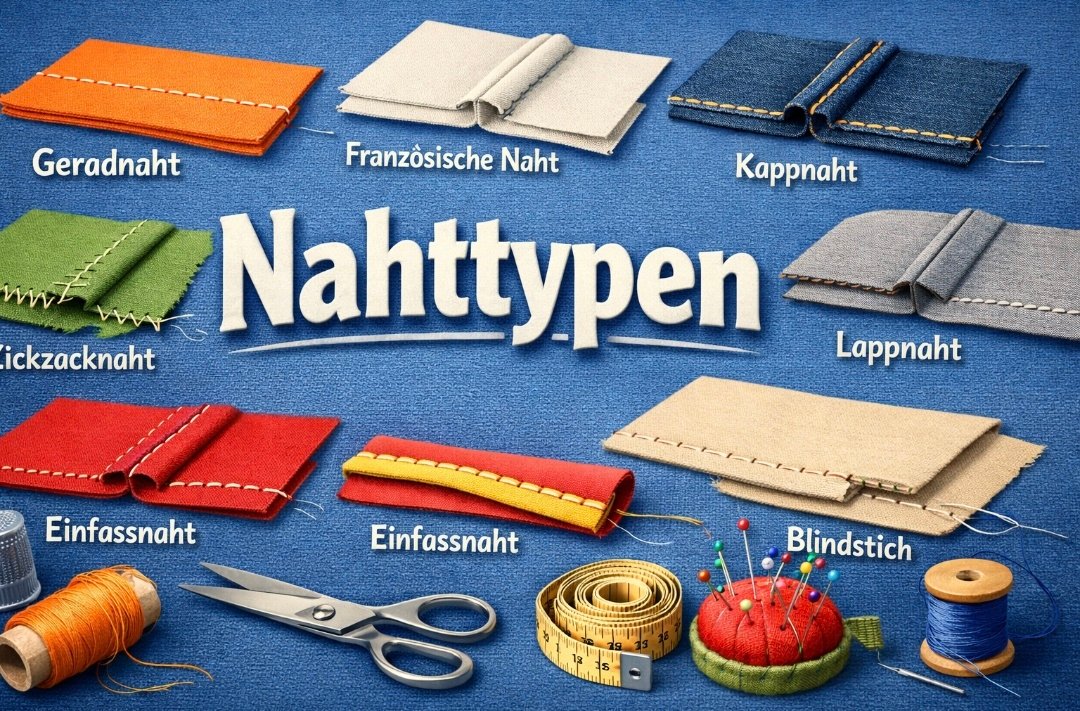
Nahttypen are categorized based on how fabric edges are treated, how stitches penetrate the material, and how the seam distributes mechanical forces. Some seam types are designed for flexibility, others for maximum tensile strength, and still others for decorative or finishing purposes. The classification system commonly recognized in textile engineering includes plain seams, flat-felled seams, bound seams, lapped seams, French seams, and several specialized constructions used in technical textiles.
What makes nahttypen particularly important is their direct influence on product performance. A poorly chosen seam can compromise an otherwise high-quality fabric. Conversely, an intelligently selected seam type can dramatically increase durability, comfort, and resilience. In this way, seam selection becomes an integral part of product design rather than an afterthought in assembly.
The Structural Logic Behind Seam Classifications
Every seam must manage forces. When a garment stretches across the shoulders, when a tent withstands wind pressure, or when a car seat endures daily friction, the seam absorbs stress. The structural logic of nahttypen revolves around force distribution. Some seam constructions align stress along the stitching line, while others disperse it across folded layers of fabric.
For instance, a basic plain seam joins two edges together with a single line of stitching. It is efficient and widely used, but it concentrates stress directly on the stitch line. By contrast, a flat-felled seam encloses raw edges within folded layers, creating multiple rows of stitching. This configuration distributes mechanical load more evenly and significantly increases strength.
The logic extends beyond strength alone. Certain seam types are engineered to prevent fraying, especially in loosely woven fabrics. Others are designed to lie flat against the skin, minimizing irritation in athletic or intimate wear. In technical applications, seam construction can even contribute to waterproofing or air resistance. Thus, nahttypen are not merely aesthetic variations but structural solutions tailored to real-world demands.
Common Seam Types and Their Functional Roles
Among the most frequently used nahttypen is the plain seam, which forms the backbone of garment construction. It is economical, fast to produce, and adaptable. However, its simplicity means it often requires finishing techniques such as overlocking to prevent raw edge unraveling.
The French seam is a refined variation often found in delicate fabrics. It encloses raw edges within the seam itself, resulting in a clean interior finish. While it may not always provide industrial-level strength, it offers exceptional durability for lightweight materials and enhances wearer comfort.
Flat-felled seams are synonymous with strength. Commonly used in denim manufacturing, they are instantly recognizable in jeans. The layered construction creates a sturdy joint capable of enduring constant strain. This is why workwear and outdoor garments frequently rely on this seam type.
Lapped seams are often used in leatherwork and heavy textiles. Rather than joining edges directly, one material overlaps another. This arrangement allows thicker materials to lie flat while maintaining strength. In industries such as automotive upholstery, this seam type contributes to both structural integrity and visual design.
Each of these examples demonstrates that nahttypen are chosen not only for appearance but for precise functional reasons. Seam construction must match fabric weight, fiber composition, and intended use. A mismatch between seam and material can undermine performance, no matter how advanced the fabric itself may be.
Nahttypen in Technical and Industrial Applications
While seam construction is often discussed in fashion, its significance extends far beyond clothing. In industrial textiles, nahttypen determine whether protective gear resists tearing under extreme stress or whether inflatable structures maintain airtight integrity.
In the production of safety equipment such as firefighting suits or chemical-resistant garments, seam strength is paramount. Specialized seam constructions may incorporate sealing tapes or multi-layer reinforcement to prevent leakage. Here, seam selection becomes a matter of safety, not style.
Outdoor equipment provides another compelling example. Tents, sails, and backpacks endure constant environmental exposure. Seam designs must account for tension, moisture, and ultraviolet degradation. Engineers carefully evaluate stitch density, thread composition, and seam folding techniques to ensure durability under unpredictable conditions.
Even in medical textiles, seam choice plays a crucial role. Surgical gowns and sterile drapes require seams that minimize particle shedding and fluid penetration. In these contexts, nahttypen are evaluated under strict quality standards to ensure reliability.
The industrial perspective highlights a powerful truth: seams are structural components. Their design influences product lifespan, safety compliance, and operational efficiency. They are not merely connecting lines but engineered joints.
Material Compatibility and Seam Performance
Not all fabrics behave the same way, and seam construction must reflect this reality. A seam that performs well on tightly woven cotton may fail on stretch knit fabric. Therefore, understanding material behavior is essential when selecting among different nahttypen.
Knitted fabrics require seams that accommodate elasticity. If the seam does not stretch along with the fabric, it may break under tension. This is why garments made from performance fabrics often use seam constructions that allow controlled flexibility.
Conversely, rigid materials such as canvas or leather demand seam types that can handle bulk without distorting the surface. Heavy-duty threads and reinforced stitching patterns are often employed to maintain strength.
Another consideration is thickness. Multiple fabric layers increase bulk at the seam line. Designers must anticipate how seam construction will affect drape, comfort, and visual appearance. An overly thick seam in a lightweight blouse can compromise elegance, just as an insufficiently reinforced seam in workwear can compromise durability.
The relationship between material and seam is dynamic. Nahttypen are selected through a balance of mechanical understanding and aesthetic judgment. The decision requires experience, testing, and awareness of long-term wear conditions.
Innovation and Modern Seam Technologies
The evolution of seam construction has not stopped with traditional stitching methods. Advances in technology have introduced ultrasonic welding, adhesive bonding, and laser sealing techniques that expand the possibilities of nahttypen.
Ultrasonic welding, for instance, uses high-frequency vibrations to fuse synthetic materials without thread. This method produces flat, smooth seams ideal for waterproof garments. It eliminates needle perforations, which can weaken fabric or allow moisture penetration.
Adhesive bonding technologies also contribute to lightweight, flexible seam constructions. In sports apparel, bonded seams reduce friction against the skin and create a sleek silhouette. Such developments demonstrate how seam engineering continues to adapt to modern performance demands.
Despite these innovations, traditional seam types remain relevant. In many applications, stitched seams still offer unmatched reliability and cost efficiency. The future of seam design lies in hybrid approaches that combine stitching with bonding or sealing techniques to enhance performance.
Quality Control and Seam Testing
The durability of any seam must be verified through rigorous testing. Manufacturers conduct tensile strength tests, seam slippage evaluations, and abrasion resistance assessments to ensure reliability. Seam failure can result from inadequate stitch density, improper thread selection, or incompatible seam type.
In quality-conscious production environments, seam testing is integrated into the design phase. Engineers simulate stress conditions to predict long-term performance. Through such testing, weaknesses in seam construction are identified before products reach consumers.
This attention to detail underscores the importance of nahttypen in maintaining consistent quality standards. A well-designed seam is not simply assumed to perform; it is scientifically validated.
READ MORE: poieno: The Ancient Verb That Shaped Creation & Thought Arts
Conclusion
Seams may appear simple, but they embody a sophisticated blend of engineering and craftsmanship. The study of nahttypen reveals how critical these structural connections are to the strength, comfort, and longevity of countless products. From everyday clothing to life-saving protective equipment, seam construction shapes functionality in ways that often go unnoticed.
Choosing the appropriate seam type requires understanding material behavior, mechanical stress distribution, and aesthetic considerations. It demands thoughtful design rather than routine assembly. As textile technology continues to evolve, seam innovation will remain central to product development.
Ultimately, mastery of seam construction is mastery of structural integrity. When carefully selected and expertly executed, seam types transform fabric pieces into resilient, dependable creations capable of withstanding both time and use.
FAQs
What does the term nahttypen mean in textile manufacturing?
Nahttypen refers to the classification of different seam constructions used to join materials together. It encompasses various stitching and folding techniques designed to achieve specific structural and aesthetic outcomes.
Why are seam types important for product durability?
Seam types determine how stress is distributed across joined materials. A well-chosen seam increases resistance to tearing, stretching, and wear, significantly extending a product’s lifespan.
Are modern seam technologies replacing traditional stitching methods?
Modern technologies such as ultrasonic welding and adhesive bonding are expanding possibilities, but traditional stitched seams remain widely used due to their reliability and cost-effectiveness.
How do manufacturers test seam strength?
Manufacturers conduct tensile strength tests, seam slippage evaluations, and abrasion resistance assessments to ensure that seams meet performance and safety standards.
Can the wrong seam type affect garment comfort?
Yes, an unsuitable seam can cause irritation, restrict movement, or create bulk. Selecting the appropriate seam construction ensures both durability and wearer comfort.
