
Blogs
هنتاوي.com: A Deep Look Into Its Culture and Impact


Introduction
In today’s fast-moving digital world, niche platforms often grow into massive cultural touchpoints, shaping how communities connect and share interests. هنتاوي.com is one such platform that has steadily gained attention for how it brings together fans of illustrated storytelling, online fandoms, and modern internet culture. From casual browsers to dedicated enthusiasts, many people encounter this name while exploring creative digital spaces.
This article takes an in-depth, balanced, and informative look at هنتاوي.com, explaining what it represents, how it developed, and why it matters. By the end, readers will understand its background, its broader influence, and the conversations it has sparked across different audiences.
Quick Bio
| Field | Details |
|---|---|
| Website Name | هنتاوي.com |
| Type | Online content platform |
| Primary Focus | Illustrated digital media & fan culture |
| Launch Period | Late 2010s |
| Main Audience | Young adults and online fandom communities |
| Language Availability | Primarily Arabic with global access |
| Accessibility | Web-based, no dedicated mobile app |
| Cultural Role | Part of modern niche internet culture |
Understanding What هنتاوي.com Represents
At its core, هنتاوي.com is not just a website but a reflection of how online communities form around shared creative interests. Platforms like this often act as digital meeting points where users discover artwork, discuss narratives, and exchange opinions. Unlike mainstream entertainment hubs, such niche platforms thrive because they serve a very specific audience with focused interests.
READ MORE: Supermaked: How Modern Marketplaces Shape Daily Life
What makes this type of platform interesting is how it adapts global trends to local languages and cultures. By presenting content in Arabic, it lowers the barrier for users who might otherwise feel disconnected from global fandom spaces. This localization helps explain its steady growth and relevance.
The Rise of Niche Content Platforms Online
The internet was once dominated by a handful of massive websites, but that era has shifted. Today, smaller platforms grow quickly by serving dedicated communities. هنتاوي.com fits into this broader movement, where users seek spaces that feel personal and interest-driven rather than generic.
People often prefer environments where they feel understood. Niche platforms provide that comfort by focusing on shared tastes. Over time, these sites develop their own norms, slang, and loyal audiences. This sense of belonging is a major reason users return frequently.
Cultural Influence in Arabic-Speaking Communities
One of the most notable aspects of هنتاوي.com is its role within Arabic-speaking online communities. Many global platforms do not fully support Arabic users or cater to regional preferences. This creates a gap that localized sites naturally fill.
By offering familiar language and cultural context, platforms like this allow users to explore global artistic trends while still feeling grounded. The result is a blend of international creativity and regional identity. This balance has helped normalize participation in digital fandoms for many users who previously felt excluded.
How Users Interact With the Platform
User interaction is central to any successful online platform. On هنتاوي.com, engagement often goes beyond passive viewing. Users comment, share opinions, and recommend content to others. These interactions build micro-communities within the larger platform.
This behavior mirrors how people interact in physical fan clubs or social gatherings. The difference is scale and speed. Online, conversations happen instantly and across borders. That immediacy helps content spread quickly and keeps the community active.
The Role of Anonymity and Freedom Online
Another important factor behind the popularity of platforms like هنتاوي.com is anonymity. Many users feel more comfortable exploring personal interests when they are not tied to their real-world identities. This sense of freedom encourages honest discussion and experimentation.
However, anonymity also comes with responsibility. Successful platforms usually balance openness with clear community guidelines. When managed well, this balance allows creativity to flourish without descending into chaos.
Digital Art and Storytelling as a Global Language
Illustrated storytelling has become a universal language online. Regardless of geography, people connect through visuals and narratives. هنتاوي.com participates in this global exchange by acting as a gateway to illustrated media trends that originated in different parts of the world.
This exchange works both ways. Local audiences consume global styles, while their feedback and engagement influence how those styles evolve. Over time, this creates a loop where culture constantly reshapes itself.
Ethical Conversations Around Online Content
Every platform that hosts creative material eventually faces ethical questions. Discussions around age-appropriate access, content moderation, and cultural sensitivity are common. هنتاوي.com is no exception, as users and observers often debate where lines should be drawn.
These conversations are healthy when handled constructively. They push platforms to improve policies and encourage users to think critically about what they consume. In many ways, such debates show that the community cares about its space.
Comparing هنتاوي.com With Similar Platforms
While many websites serve illustrated media fans, not all of them resonate equally with Arabic-speaking audiences. What sets هنتاوي.com apart is its focus on language accessibility and community familiarity.
Global platforms may offer larger libraries, but localized sites often win in terms of comfort and relevance. Users do not feel like outsiders; instead, they feel like contributors to a shared culture. That sense of ownership is powerful.
The Future of Specialized Online Communities
Looking ahead, platforms like هنتاوي.com highlight a broader trend toward specialization. As the internet grows, people will continue seeking smaller, more meaningful spaces. Large platforms cannot meet every niche need, leaving room for focused communities to thrive.
READ MORE: Masgonzola: A Deep Dive Into Flavor, Craft, and Culture
The challenge will be sustainability. Maintaining quality, community trust, and relevance over time requires constant adaptation. Platforms that listen to users and evolve responsibly are more likely to endure.
Conclusion
هنتاوي.com stands as an example of how niche digital platforms can shape online culture, especially within underrepresented language communities. By offering a focused space for illustrated media and discussion, it has created a sense of belonging for many users.
Understanding its role helps readers see the bigger picture of how the internet is changing—moving from massive, one-size-fits-all spaces to smaller, interest-driven communities. The key takeaway is clear: when people feel seen and understood, online spaces become more than websites; they become cultures.
Frequently Asked Questions (FAQs)
What is هنتاوي.com mainly known for?
It is known as a niche online platform centered around illustrated digital media and fan discussions.
Who typically uses هنتاوي.com?
Most users are young adults interested in online fandom culture and creative storytelling.
Is هنتاوي.com available only in Arabic?
While it primarily serves Arabic speakers, it can be accessed globally by anyone.
Why do niche platforms like this gain popularity?
They offer focused content and a sense of community that larger platforms often lack.
Will platforms like هنتاوي.com continue to grow?
As long as users seek personalized online spaces, such platforms are likely to remain relevant.

Introduction
Few freshwater reptiles are as quietly captivating as painted turtle turtles. With shells brushed in olive, crimson, and gold, they seem almost hand-decorated by nature itself. Yet beneath that striking appearance lies a creature of extraordinary resilience, evolutionary intelligence, and ecological importance. Painted turtle turtles are not rare, nor are they exotic in the traditional sense. They inhabit ordinary ponds, marshes, and slow-moving rivers across North America. But what makes them extraordinary is not where they live; it is how they live.
These turtles have mastered survival in climates that freeze solid for months. They navigate delicate aquatic ecosystems with precision. They mature slowly, think carefully, and move deliberately, embodying a tempo that feels almost philosophical. Watching one bask on a half-submerged log under the afternoon sun offers more than a glimpse of wildlife; it offers a lesson in adaptation and balance.
To understand painted turtle turtles fully is to look beyond their decorative shells and into the biological, ecological, and behavioral story that has allowed them to thrive for millions of years.
What Is Painted Turtle Turtles?
Painted turtle turtles refer to members of the species Chrysemys picta, one of the most widespread turtle species in North America. They belong to the family Emydidae, a group that includes many semi-aquatic turtles commonly found in freshwater habitats. Their common name comes from the bright streaks of red, orange, and yellow that line their shell margins, neck, and limbs, giving them an almost artistic appearance.
READ MORE: Manga18: A Deep Cultural Study of Adult Manga Phenomenon Era
There are four recognized subspecies: the Eastern painted turtle, Midland painted turtle, Western painted turtle, and Southern painted turtle. Each shows slight variations in shell pattern and geographic distribution, yet all share the same essential biological design. They possess a smooth, relatively flat carapace, webbed feet suited for swimming, and a plastron that often carries intricate symmetrical markings.
Painted turtle turtles are medium-sized reptiles, typically measuring between 4 to 10 inches in shell length, depending on sex and region. Females are generally larger than males, a common trait among many turtle species. Despite their modest size, they play an outsized role in freshwater ecosystems.
Evolutionary History and Geographic Range
Painted turtle turtles have a lineage that stretches back millions of years. Fossil evidence suggests that their ancestors appeared during the late Miocene epoch. Over time, they adapted to shifting climates, expanding ice sheets, and changing river systems across North America. Their modern distribution now extends from southern Canada to northern Mexico, and from the Atlantic coast to the Pacific Northwest.
This wide geographic spread is not accidental. Painted turtle turtles are exceptionally adaptable. They can survive in ponds that freeze entirely during winter and in warm southern wetlands where temperatures remain high year-round. Their evolutionary flexibility has allowed them to persist where many reptiles would perish.
Their ability to colonize new habitats often depends on water availability. Slow-moving rivers, marshes, lakes, and even roadside ditches can support them, provided there is access to basking sites and nesting grounds. They are not strictly territorial, but they display a strong preference for familiar environments.
Physical Characteristics and Unique Markings
The visual appeal of painted turtle turtles often draws attention first, but their anatomy reveals even more intriguing details. Their shell, or carapace, is smooth and slightly domed, usually dark olive or black. Along the edges, thin streaks of red or yellow create the “painted” effect that gives the species its name.
The plastron, or lower shell, varies among subspecies. Western painted turtles, for instance, have a vivid red plastron with dark central patterns, while Eastern varieties may display more subdued tones. Their heads and limbs are striped with fine lines of yellow and red, which help with camouflage in aquatic vegetation.
Their webbed feet make them efficient swimmers, capable of quick bursts of speed when threatened. Their jaws are sharp and beak-like, allowing them to grip both plant matter and small prey. Unlike mammals, they do not possess vocal cords, but they communicate subtly through body posture and environmental cues.
Perhaps the most astonishing physical trait is their tolerance to freezing temperatures. During winter, painted turtle turtles can survive in oxygen-depleted water under ice, entering a state of suspended animation that borders on biological miracle.
Habitat Preferences and Environmental Adaptability
Painted turtle turtles favor calm freshwater habitats rich in aquatic plants. These environments provide food, cover from predators, and safe basking platforms. Fallen logs, rocks, and muddy banks are particularly valuable because basking helps regulate body temperature and prevents fungal infections on the shell.
What sets them apart from many other reptiles is their ability to tolerate polluted or disturbed waters better than more sensitive species. This does not mean they thrive in contamination, but it does explain why they remain common even as wetlands shrink.
Their adaptability extends to climate extremes. In northern regions, they survive winters by burrowing into mud at the bottom of ponds. Their metabolism slows dramatically, and they absorb oxygen through specialized tissues in their throat and cloaca. This physiological adaptation allows painted turtle turtles to endure months without breathing air.
In warmer climates, they remain active longer throughout the year, feeding and basking regularly. This geographic flexibility explains their extensive distribution.
Diet and Feeding Behavior
Painted turtle turtles are omnivorous, meaning they consume both plant and animal matter. As juveniles, they tend to eat more protein-rich foods such as insects, tadpoles, small fish, and aquatic invertebrates. This supports rapid growth during early development. As they mature, their diet gradually includes more vegetation, including algae, duckweed, and submerged plants.
They are opportunistic feeders rather than aggressive hunters. In water, they rely heavily on sight to locate food. Their feeding behavior is often deliberate. They grasp prey with their jaws and use their forelimbs to tear apart larger pieces.
Interestingly, painted turtle turtles cannot swallow food on land. They must eat in water because the liquid helps them swallow by lubricating and assisting the movement of food down the throat. This subtle biological detail highlights how deeply adapted they are to aquatic life.
Reproduction and Life Cycle
The reproductive cycle of painted turtle turtles is closely tied to seasonal rhythms. Mating typically occurs in spring and sometimes again in fall. Females can store sperm for several months, allowing fertilization to occur long after mating.
Nesting is a vulnerable process. Females leave the safety of water to dig nests in sandy or loose soil, often several hundred feet from the shoreline. They use their hind legs to excavate a flask-shaped cavity where they deposit between four and twenty eggs, depending on size and subspecies.
Temperature plays a critical role in determining the sex of hatchlings. Warmer incubation temperatures tend to produce females, while cooler temperatures produce males. This phenomenon, known as temperature-dependent sex determination, makes climate conditions deeply influential on population balance.
Hatchlings sometimes overwinter in the nest, surviving freezing temperatures before emerging in spring. Painted turtle turtles may live 20 to 40 years in the wild, and some individuals have been recorded living even longer in protected environments.
Behavioral Patterns and Social Interactions
Despite appearing solitary, painted turtle turtles exhibit subtle social behaviors. Basking groups often form on logs or rocks, arranged in tiers as individuals compete gently for sunlit space. When disturbed, they slide into the water in synchronized motion, creating a sudden ripple of movement.
They are generally non-aggressive but can display dominance through posture, especially during mating season. Courtship involves delicate underwater movements, with males fluttering their long claws near a female’s face in a ritualized display.
These turtles are also known for homing behavior. Research indicates that individuals displaced from their home ponds can navigate back over considerable distances. The mechanisms behind this navigation are still under investigation, but magnetic field detection and environmental memory are likely involved.
Ecological Role and Importance
Painted turtle turtles contribute significantly to aquatic ecosystem balance. By consuming insects and small invertebrates, they help regulate prey populations. Their grazing on aquatic plants prevents overgrowth that could otherwise disrupt oxygen levels in water bodies.
They also serve as prey for raccoons, herons, large fish, and snapping turtles, placing them firmly within the food web. Their eggs are especially vulnerable, providing nourishment for various predators.
Beyond direct ecological interactions, they act as indicators of freshwater health. Stable painted turtle turtle populations often suggest functioning wetland ecosystems. Declines can signal environmental stress.
Threats and Conservation Concerns
Although painted turtle turtles are not currently endangered as a species, localized threats continue to impact populations. Habitat destruction through wetland drainage and urban development remains a primary concern. Road mortality during nesting season claims countless females each year.
Pollution, particularly from agricultural runoff and plastics, affects water quality and nesting sites. Climate change introduces new challenges, especially through temperature-dependent sex determination, which could skew population ratios over time.
Conservation efforts often focus on habitat preservation, safe road crossings, and public education about responsible pet ownership. Painted turtle turtles are sometimes captured for the pet trade, but removing them from the wild can disrupt local ecosystems.
Painted Turtle Turtles in Human Culture and Science
Painted turtle turtles have quietly influenced scientific research, particularly in studies of anoxia tolerance and freeze survival. Their remarkable ability to endure oxygen deprivation has attracted biomedical interest, offering potential insights into stroke and cardiac arrest research.
Culturally, they are often among the first wild turtles children encounter in nature. Their approachable size and vibrant colors create early connections between people and wildlife. In many regions, they symbolize patience and longevity.
Their presence in backyard ponds and local lakes fosters a sense of continuity with the natural world. They remind us that even common creatures hold extraordinary biological stories.
READ MORE: streameast: Inside the Web’s Most Talked-About Sports Stream
Conclusion
Painted turtle turtles are far more than decorative reptiles basking on logs. They are evolutionary survivors, ecological stabilizers, and biological marvels capable of withstanding conditions that would overwhelm most vertebrates. Their adaptability across climates, their intricate reproductive strategies, and their understated social behaviors reveal a species shaped by millions of years of environmental negotiation.
Understanding painted turtle turtles invites a broader reflection on freshwater ecosystems and the delicate balance sustaining them. These turtles are not dramatic predators nor massive reptiles commanding fear. They are steady presences, woven into the quiet rhythms of ponds and marshes.
Protecting them ultimately means protecting water, wetlands, and the fragile interconnected systems that sustain countless forms of life. In their painted shells lies a story of endurance that continues to unfold.
FAQs
What makes painted turtle turtles different from other freshwater turtles?
Painted turtle turtles are distinguished by their brightly colored shell margins and striped limbs. Their remarkable ability to survive freezing temperatures and oxygen deprivation also sets them apart from many other freshwater species.
How long do painted turtle turtles live?
In the wild, they commonly live between 20 and 40 years, although some individuals may exceed that lifespan under favorable conditions.
Do painted turtle turtles make good pets?
While they are sometimes kept as pets, they require specific aquatic environments, UV lighting, and long-term care. Removing them from the wild is discouraged, and responsible sourcing is essential.
What do painted turtle turtles eat in the wild?
They eat a varied diet that includes aquatic insects, small fish, tadpoles, algae, and aquatic plants. Juveniles tend to consume more animal protein than adults.
How do painted turtle turtles survive winter?
They burrow into mud at the bottom of ponds and drastically slow their metabolism. They can absorb oxygen through specialized tissues, allowing them to survive months beneath ice-covered water.
Introduction
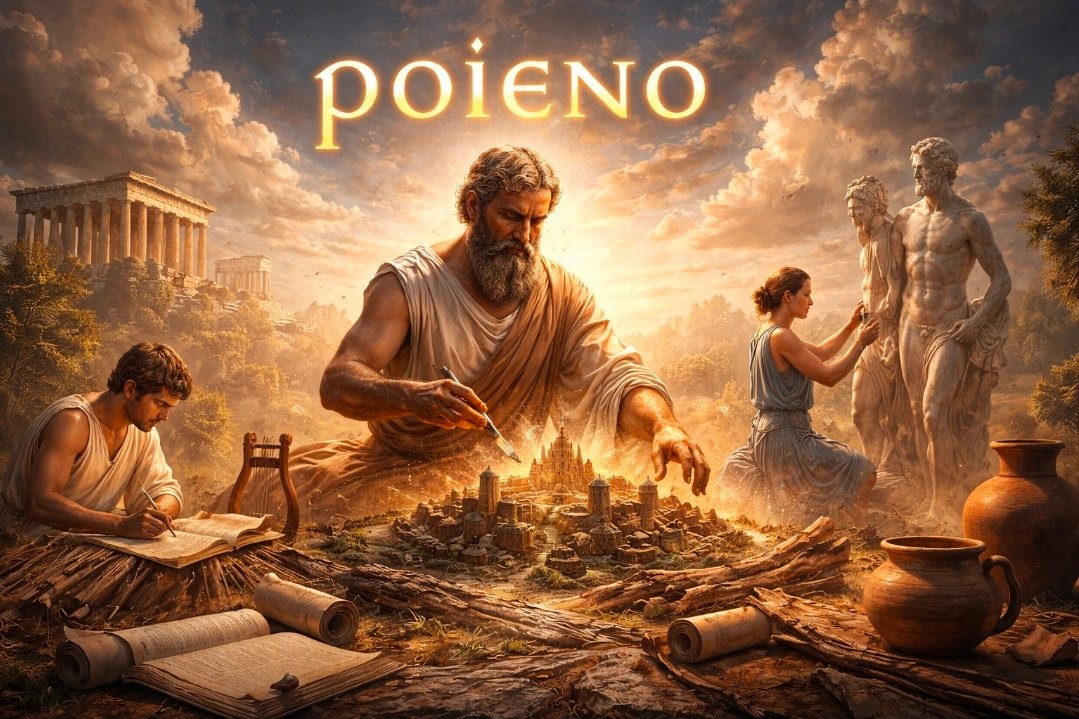
Language does more than describe the world; it shapes how we understand it. Certain words carry within them entire philosophies, subtle shifts in meaning that ripple through centuries of human thought. One such word is poieno. Though it may appear simple at first glance, its roots stretch deep into the foundations of Western literature, philosophy, and artistic expression. To understand poieno is to understand something essential about creation itself.
The word poieno traces back to ancient Greek origins, where it signified far more than a mechanical act of producing something. It suggested an act of bringing into being, of shaping raw potential into meaningful form. In this way, poieno stands at the crossroads of craft, imagination, and responsibility. It is not merely about making; it is about intentional creation.
Across time, this concept has influenced poetry, theology, philosophy, and even modern ideas about creativity and innovation. Yet few people pause to examine how deeply embedded this ancient verb is in our intellectual and artistic heritage. To explore poieno is to explore how humanity understands the act of creation itself.
What Is poieno
At its core, poieno comes from the ancient Greek verb ποιέω, which means “to make,” “to do,” or “to create.” However, these English translations only scratch the surface. In classical Greek usage, the word carried nuances of craftsmanship, authorship, and artistic formation. It implied not just assembling materials, but shaping them into something purposeful and meaningful.
READ MORE: wheon cricket 07: The Cult Classic Reimagined Legacy Revival
In ancient texts, poieno was used to describe the making of objects, the writing of poetry, the building of cities, and even the performing of actions in moral contexts. When a poet composed a verse, he was said to poieno it. When a craftsman forged a tool, he poieno it. The word tied together physical creation and intellectual artistry in a way that modern language often separates.
From this verb emerged the word “poet,” literally meaning “maker.” A poet was not merely someone who rhymed words but someone who shaped reality through language. In this sense, poieno reveals an ancient worldview where art and action were intimately connected. Creation was not passive. It was deliberate, thoughtful, and often transformative.
Understanding poieno requires recognizing that the Greeks did not sharply divide between thinking and making. To create was to think embodied. To act was to give form to ideas. This fusion of thought and craftsmanship continues to echo through Western intellectual traditions.
The Philosophical Depth Behind poieno
The richness of poieno becomes even more apparent when examined through philosophical lenses. Ancient thinkers such as Plato and Aristotle wrestled with questions about creation, imitation, and originality. Although they approached art differently, both engaged deeply with the idea embedded in poieno.
For Plato, creative acts were often seen as imitations of higher forms. The act of making something in the physical world was secondary to ideal realities. Yet even within this framework, the act of poieno held power. The maker was participating, however imperfectly, in shaping reflections of truth.
Aristotle, on the other hand, offered a more grounded understanding. In his analysis of tragedy and drama, he described poetry as a structured act of creation governed by internal logic. The poet did not merely copy reality but reorganized it to reveal universal truths. Here, poieno becomes a disciplined art. It involves skill, structure, and intentionality.
What is striking is how the concept bridges practical skill and intellectual depth. It does not reduce creation to spontaneous inspiration, nor does it limit it to technical assembly. Instead, poieno implies thoughtful craftsmanship guided by insight.
Even in later philosophical traditions, echoes of this idea persist. The distinction between making and doing, between production and action, continues to shape discussions about creativity, ethics, and innovation.
poieno and the Birth of Poetry
It is impossible to discuss poieno without acknowledging its central role in the development of poetry. The English word “poetry” ultimately derives from the same Greek root. In ancient Greece, poetry was not viewed as decorative language. It was a powerful method of preserving history, transmitting moral values, and exploring existential questions.
When Homer composed epic narratives, he was engaged in an act of poieno. His verses shaped cultural memory. They gave structure to myths and defined heroic ideals. The act of making poetry was not trivial; it was foundational to communal identity.
The same holds true for dramatic playwrights like Sophocles and Euripides. Their works were crafted performances that examined justice, fate, and human responsibility. Through poieno, they created spaces where society could confront its deepest anxieties.
Even today, poetry retains traces of this ancient understanding. A poem is not merely written; it is made. The poet molds rhythm, imagery, and emotion into a coherent form. In this sense, every modern poet unknowingly participates in the legacy of poieno.
Craftsmanship and Responsibility
Beyond art, poieno carries ethical implications. To create something is to assume responsibility for its impact. In ancient societies, makers were not detached from their work. A craftsman’s identity was bound to what he produced.
This connection between maker and creation invites reflection in our contemporary world. Technological innovation, architectural design, and even digital content creation all involve acts of making. Yet modern culture sometimes separates the creator from the consequences of creation.
Revisiting the deeper meaning of poieno encourages a more integrated perspective. Making is not neutral. It shapes environments, influences thought, and alters lives. The ancient understanding suggests that creation demands awareness and care.
This ethical dimension adds weight to the word. It is not simply about productivity. It is about meaningful formation. To engage in poieno is to participate in shaping the shared human experience.
The Evolution of Meaning Across Time
Language evolves, and so does the interpretation of key concepts. While the original Greek context of poieno emphasized craftsmanship and artistry, later eras adapted its spirit in different ways.
During the Renaissance, renewed interest in classical texts revived admiration for the creative act. Artists and thinkers began to see themselves as original makers rather than mere imitators. The concept of the creative genius emerged, subtly shifting the emphasis from disciplined craft to inspired individuality.
In the modern era, creativity became associated with innovation, disruption, and novelty. The spirit of poieno survived but often in fragmented form. The balance between skill and imagination sometimes tilted heavily toward one side.
Yet the enduring relevance of the word lies in its holistic nature. It reminds us that making is both technical and imaginative, both structured and expressive. Its ancient roots offer a corrective to extremes, encouraging balance between mastery and inspiration.
poieno in Contemporary Creativity
Though centuries have passed since ancient Greek philosophers first used the term, the essence of poieno remains visible in modern creative fields. Consider architecture. A building is not simply constructed; it is envisioned, designed, and then brought into physical form. The architect acts as a maker in the fullest sense.
The same applies to software development. Writing code involves shaping abstract logic into functional systems. It requires imagination and discipline, creativity and precision. In this light, coding can be understood as a modern expression of poieno.
Even entrepreneurship reflects this principle. Founders create organizations from ideas. They transform vision into structure. They craft cultures and systems that influence communities. These acts of making carry profound social consequences.
The persistence of poieno across disciplines reveals its universality. Whenever humans transform thought into tangible form, they enact this ancient verb’s meaning.
The Psychological Power of Making
Creation is not only external; it shapes the creator internally. Psychological research increasingly confirms what ancient thinkers intuitively understood: the act of making contributes to well-being and identity formation.
When individuals engage in creative activity, they experience a sense of agency. They move from passive consumption to active participation. This shift fosters confidence and meaning. The spirit of poieno empowers individuals to see themselves as capable shapers of their environment.
There is also a therapeutic dimension. Crafting something with one’s hands or mind can restore focus and calm. It organizes chaotic thoughts into structured expression. In doing so, it mirrors the ancient idea that making brings order to potential.
In a world saturated with distraction, reconnecting with the deeper meaning of poieno offers a pathway to intentional living. It invites people to create thoughtfully rather than merely react.
The Tension Between Making and Consuming
Modern society often prioritizes consumption over creation. Entertainment is streamed instantly. Products arrive with a click. Content is endlessly scrolled. In this environment, the ancient ethos of poieno risks fading into the background.
Yet something within human nature resists pure consumption. People feel restless when they only absorb what others have made. There is a deep-seated drive to contribute, to shape, to build.
Reclaiming the value of making restores balance. It shifts focus from passive reception to active engagement. Whether through art, craft, writing, or innovation, embracing the spirit of poieno reconnects individuals with a more participatory mode of existence.
This tension between making and consuming defines much of modern cultural anxiety. The solution may lie not in abandoning technology but in re-centering creation as a meaningful act.
READ MORE: rdxhdcool: Inside the Shadow Streaming Network Exposed Today
Conclusion
The word poieno may appear ancient and distant, yet its implications are profoundly contemporary. It embodies a vision of creation that unites thought and action, imagination and discipline, responsibility and expression. From poetry to architecture, from philosophy to entrepreneurship, the essence of this verb continues to shape human endeavor.
Understanding poieno invites a reconsideration of what it means to create. It challenges the idea that making is merely technical or purely inspired. Instead, it presents creation as a thoughtful, intentional act that shapes both the world and the self.
In a time when speed often overshadows depth, the ancient wisdom embedded in this word offers a grounding perspective. To make is to participate in forming reality. To create is to accept responsibility for influence. In embracing poieno, we rediscover the dignity and power of purposeful creation.
FAQs
What does poieno literally mean?
Poieno originates from ancient Greek and literally means “to make,” “to do,” or “to create,” though its deeper meaning includes artistic and intentional craftsmanship.
Is poieno related to the word poetry?
Yes, the English word “poetry” comes from the same Greek root. A poet was originally understood as a “maker,” someone who creates structured works of art.
Why is poieno philosophically significant?
The concept bridges thought and action, suggesting that creation is both intellectual and practical. Ancient philosophers used it to explore art, imitation, and human responsibility.
Does poieno apply only to artistic creation?
No, the idea extends beyond art to include craftsmanship, building, ethical action, and modern forms of innovation such as technology and entrepreneurship.
How is poieno relevant today?
In a culture dominated by consumption, revisiting the deeper meaning of making encourages intentional creativity, responsibility, and meaningful contribution to society.

Introduction
The promise of free Robux has always carried a powerful pull for Roblox players. Whether it is unlocking exclusive avatars, purchasing premium game passes, or standing out in competitive experiences, Robux fuels creativity and status within the Roblox universe. This demand has led to the rise of countless third-party websites claiming to offer free currency, and one name that frequently appears in online searches is irobux.com redeem.
At first glance, it seems straightforward: visit the site, follow the steps, redeem your reward, and enjoy free Robux. But the reality behind such platforms is rarely that simple. The digital ecosystem surrounding virtual currency is layered with marketing tactics, reward loops, and often misunderstood mechanisms. In this detailed guide, we will examine what irobux.com redeem claims to offer, how it operates, what risks may be involved, and what players should truly understand before engaging with such platforms.
The goal here is not to sensationalize or dismiss, but to analyze carefully and responsibly. If you are considering using irobux.com redeem, you deserve clarity, transparency, and facts—not hype.
Understanding the Appeal of Free Robux
To understand why platforms like irobux.com redeem gain traction, we need to understand the emotional and practical weight Robux carries in the Roblox ecosystem. Robux is not just currency; it is identity. It allows players to customize characters, access premium experiences, and create games with advanced tools.
READ MORE: content://cz.mobilesoft.appblock.fileprovider/cache/blank.html
For younger audiences especially, Robux can represent social belonging. A rare avatar item or exclusive animation can feel like a badge of honor. When official Robux purchases require real money, the desire for a free alternative becomes extremely tempting.
This psychological gap between desire and affordability is exactly where websites like irobux.com redeem position themselves. They market convenience and accessibility, presenting a shortcut to digital wealth. But shortcuts in digital economies often come with hidden trade-offs.
How irobux.com redeem Claims to Work
Most platforms operating under names like irobux.com redeem follow a similar pattern. They typically advertise a simple process: enter your Roblox username, choose the amount of Robux you want, complete certain verification steps, and receive your reward.
The “verification” stage is often where things become complex. Users may be asked to complete surveys, download apps, watch advertisements, or subscribe to services. These tasks are usually tied to affiliate marketing networks. Each action generates revenue for the platform operators.
In theory, the revenue earned from completed offers could fund small Robux giveaways. In practice, many users report that rewards either never arrive or require repeated verifications. The system is structured in a way that keeps users engaged while generating revenue for the site.
This does not automatically mean malicious intent, but it does reveal that the primary income stream is not generosity—it is user participation in advertising funnels.
The Legitimacy Question
One of the most important questions surrounding irobux.com redeem is whether it is officially connected to Roblox Corporation. The answer is no. Roblox maintains strict policies regarding third-party currency generators. Official Robux can only be obtained through purchases, gift cards, premium subscriptions, or earnings from game development within the platform.
Any website claiming to directly “generate” Robux outside Roblox’s official systems operates independently. This separation matters because Roblox’s terms of service prohibit certain external reward schemes. Users who unknowingly engage with unofficial platforms risk account penalties.
When evaluating legitimacy, transparency becomes key. Established digital services typically provide company registration details, contact information, privacy policies, and clear terms of service. Many reward-based sites offer limited corporate transparency, which should always encourage caution.
Security and Personal Data Concerns
Whenever a website requests your username or account-related information, you should pause. Even if irobux.com redeem does not directly ask for passwords, sharing usernames can still expose accounts to targeted phishing attempts.
Beyond account data, many “verification” offers request email addresses, phone numbers, or app permissions. This data may be used for marketing campaigns, third-party promotions, or resold within advertising networks.
The digital advertising world thrives on data exchange. While some offers are legitimate marketing promotions, others blur ethical lines. If a user completes multiple surveys but never receives Robux, the platform still benefits from affiliate revenue.
Understanding this structure allows users to approach such websites with informed skepticism rather than blind trust.
Why These Platforms Continue to Thrive
It is easy to dismiss websites like irobux.com redeem as obvious traps, but the reality is more nuanced. These platforms persist because they operate in legal gray zones rather than clear-cut fraud categories.
They rarely guarantee results in absolute terms. Instead, they use suggestive language: “chance to earn,” “complete offers,” “redeem rewards.” This wording reduces direct liability while still fueling hope.
Moreover, the online gaming community is vast. New players join daily. Younger audiences may not fully understand affiliate marketing mechanics or data monetization models. As long as the desire for free Robux remains strong, similar websites will continue appearing in different forms.
The Psychological Hook
There is a deeper psychological layer at play with irobux.com redeem and similar platforms. The process is gamified. You select a reward amount, watch progress bars fill, and receive notifications suggesting success is near.
This taps into the same reward circuitry that games use. Even if no Robux arrives, the act of progressing through tasks creates a sense of investment. Once time and effort have been spent, users are more likely to continue completing additional offers.
This behavioral design is not accidental. It mirrors strategies used in mobile free-to-play games and online advertising funnels. Understanding this helps users step back and make rational decisions.
Real Risks Versus Perceived Risks
Not every user who visits irobux.com redeem will experience account theft or malware. However, risk is not only about worst-case scenarios. Risk also includes wasted time, exposure to aggressive marketing, and potential violation of Roblox policies.
There is also reputational risk within the Roblox ecosystem. Accounts flagged for suspicious activity may face temporary restrictions or permanent bans. Even if unintentional, involvement with unauthorized reward platforms can trigger automated detection systems.
When compared to official methods of earning Robux—such as developing games, trading limited items, or subscribing to Roblox Premium—the shortcut offered by external platforms often carries disproportionate uncertainty.
Safer Alternatives to Earning Robux
Instead of relying on irobux.com redeem, players can explore legitimate earning strategies within Roblox itself. Creating popular experiences and monetizing them through game passes or developer products remains one of the most sustainable approaches.
Roblox Premium offers monthly Robux stipends and trading benefits. Gift cards purchased through authorized retailers provide secure redemption methods. Community events and official promotions occasionally distribute rewards directly within the platform.
These paths require patience and creativity, but they align with Roblox’s ecosystem rather than working against it. Over time, building skills within the platform can generate more consistent value than chasing uncertain external offers.
The Broader Lesson About Online Reward Sites
The conversation around irobux.com redeem reflects a larger digital literacy challenge. The internet is filled with reward-driven ecosystems designed to capture attention and data. Free offers rarely exist without underlying economic motives.
This does not mean every reward platform is malicious. Some operate transparently within affiliate marketing frameworks. However, transparency is the dividing line between informed participation and exploitation.
Users who understand how advertising funnels work can approach such platforms strategically, choosing whether the exchange of time and data is worth the potential reward.
READ MORE: zavalio com: A Deep Dive Into Its Digital Impact
Conclusion
The allure of irobux.com redeem lies in a simple promise: free Robux without spending real money. For many Roblox players, that promise feels almost irresistible. Yet beneath the surface, the mechanics reveal a system built around affiliate marketing, user engagement loops, and limited transparency.
There is no official partnership between such platforms and Roblox. The risks may not always be catastrophic, but they are real—ranging from wasted effort to potential account issues.
Ultimately, digital awareness is your strongest protection. The Roblox ecosystem already offers legitimate pathways for earning and purchasing Robux safely. While irobux.com redeem may appear convenient, understanding how it operates allows you to make decisions grounded in knowledge rather than hope.
In the digital world, clarity is power. Choose platforms that respect your time, your data, and your creativity.
FAQs
Is irobux.com redeem officially connected to Roblox?
No, irobux.com redeem is not officially affiliated with Roblox Corporation. Roblox provides Robux only through its own verified systems, including direct purchases, gift cards, and in-platform earnings.
Can using irobux.com redeem get my Roblox account banned?
There is a potential risk. Roblox has policies against unauthorized currency generation systems. While not every user faces penalties, engaging with unofficial platforms can trigger account reviews.
Why do users often report not receiving Robux after completing offers?
Most reward-based sites operate on affiliate advertising models. Completing surveys or downloads generates revenue for the site, but the distribution of rewards is not always guaranteed or transparent.
Is it safe to enter my Roblox username on such platforms?
Sharing usernames alone may not immediately compromise your account, but it can expose you to targeted phishing or marketing campaigns. Caution is strongly advised.
What is the safest way to get Robux?
The safest methods include purchasing Robux directly through Roblox, redeeming official gift cards, subscribing to Roblox Premium, or earning currency by developing and monetizing games within the platform.