
Business
Why Im Building CapabiliSense for Human Potential Today Now!


Introduction
If you’ve ever felt that your potential was bigger than your circumstances, you’ll understand why im building capabilisense. We live in a world overflowing with information, tools, and opportunities—yet so many people still feel stuck, unseen, or misunderstood. Talent goes unnoticed. Capabilities remain hidden. People settle for less not because they lack ability, but because they lack clarity about what they can truly do.
This article is a deep dive into why im building capabilisense, what it stands for, and how it aims to transform the way individuals, teams, and organizations understand human capability. You’ll learn the philosophy behind it, the real-world problems it addresses, the long-term vision driving it forward, and how it can reshape education, hiring, leadership, and personal growth. This isn’t just about building a platform. It’s about building a new way of seeing people.
Quick Bio
| Field | Details |
|---|---|
| Project Name | CapabiliSense |
| Founded | 2024 |
| Founder | Independent multidisciplinary builder and researcher |
| Origin Concept | Human capability mapping and sense-making framework |
| Core Focus | Identifying, measuring, and amplifying real-world capabilities |
| Target Users | Individuals, teams, educators, founders, and organizations |
| Mission | To help people understand, express, and apply their true capabilities |
| Development Stage | Early-stage platform and framework design |
| Long-Term Vision | A global standard for capability intelligence and personal growth |
The Problem: We Don’t Truly Understand Capability
Before explaining why im building capabilisense, it’s important to understand the deeper issue. Our systems are built around credentials, titles, and surface-level metrics. We measure grades, resumes, job titles, and years of experience. But those don’t always reflect real ability.
READ MORE: Blogsternation .com: A Complete Guide to the Platform
Think about it. Two people can hold the same degree, yet perform completely differently in the real world. One thrives under pressure, adapts quickly, and solves complex problems creatively. The other struggles to apply theoretical knowledge in dynamic environments. On paper, they look equal. In reality, they are not.
We lack a structured, human-centered way to map and interpret capability. Skills are often listed, but rarely contextualized. Strengths are mentioned, but not deeply understood. Potential is talked about, but not systematically developed.
CapabiliSense is being built to close that gap.
Why Im Building CapabiliSense: A Personal Turning Point
There’s a personal reason behind why im building capabilisense. I’ve seen brilliant people underestimated simply because they didn’t fit conventional molds. I’ve watched capable founders fail—not from lack of intelligence, but from misaligned strengths. I’ve seen employees burn out because their natural capabilities were never recognized or properly deployed.
At some point, I realized the problem wasn’t motivation. It wasn’t ambition. It wasn’t even opportunity. The problem was clarity.
When people don’t understand their own capability profile, they make choices based on guesswork. They follow trends. They imitate others. They pursue paths that don’t align with how they naturally think, act, or create.
CapabiliSense began as a question: What if we could sense capability more accurately?
What Is CapabiliSense, Really?
CapabiliSense is not just a product idea. It’s a framework for understanding how people function in real-world contexts. It aims to analyze how individuals think, solve problems, collaborate, adapt, and execute.
It’s about moving beyond static labels. Instead of asking, “What degree do you have?” we ask, “How do you approach complexity?” Instead of asking, “What’s your job title?” we explore, “What environments bring out your best performance?”
This shift changes everything. It changes how we hire. It changes how we teach. It changes how we build teams. It even changes how we see ourselves.
CapabiliSense is being designed to integrate behavioral insights, performance patterns, learning velocity, and contextual intelligence into one coherent capability profile.
Reimagining Education Through Capability Awareness
Education often emphasizes memory and standardization. Students are measured by tests that reward certain cognitive styles over others. But real-world success requires adaptability, emotional intelligence, pattern recognition, and resilience.
Imagine a classroom where students understand their unique capability patterns early on. One student may excel in strategic thinking but struggle with execution. Another may be exceptional at execution but need support in big-picture planning. Instead of labeling one “smart” and the other “average,” CapabiliSense reframes both as differently capable.
This approach could help:
- Students choose more aligned career paths
- Educators design personalized learning strategies
By mapping capability rather than just performance scores, we create room for growth instead of comparison.
Transforming Hiring and Team Building
Traditional hiring often relies on resumes and interviews. Yet interviews measure confidence more than competence. Resumes measure experience more than capability.
CapabiliSense aims to offer a more structured understanding of how a person operates in practical environments. For example, someone may not have ten years of experience, but they might demonstrate extraordinary pattern recognition and fast learning cycles. That matters.
Teams also benefit from capability clarity. A startup founder might be visionary but weak in operational detail. If they understand that early, they can build a complementary team instead of duplicating strengths.
When we know what we’re good at—and what we’re not—we build smarter partnerships.
Capability vs. Skill: Understanding the Difference
One reason why im building capabilisense is the confusion between skill and capability. Skills can be learned. Capabilities are deeper patterns.
A skill is knowing how to use software. A capability is being able to learn new tools quickly under pressure. A skill is public speaking. A capability is thinking clearly in high-stakes moments.
Skills change with time and technology. Capabilities evolve, but they’re more foundational. They reflect cognitive wiring, behavioral tendencies, and decision-making style.
CapabiliSense focuses on these deeper layers. By identifying core capabilities, we create resilience. When industries shift, those with strong capability awareness adapt faster because they understand their transferable strengths.
The Psychological Impact of Being Truly Seen
There’s something powerful about being accurately understood. When someone identifies your real strengths—not just your visible achievements—it changes your confidence.
Many people carry quiet frustration. They feel underutilized. They know they can do more, but they struggle to articulate how. That internal tension leads to disengagement.
CapabiliSense aims to give language to invisible strengths. When you can name your capability pattern, you gain direction. You make choices with intention instead of imitation.
Clarity reduces anxiety. Alignment increases energy.
A Broader Vision: Capability Intelligence as Infrastructure
This isn’t just about individuals. The deeper reason why im building capabilisense is systemic. Entire industries operate inefficiently because people are misaligned with roles.
Organizations invest heavily in training, yet turnover remains high. Teams clash over differences that are actually complementary strengths misunderstood. Leaders make decisions without understanding their own blind spots.
Imagine if capability intelligence became foundational infrastructure—like financial literacy or digital literacy. Before launching a startup, founders map their capability matrix. Before forming a team, managers analyze complementary patterns. Before switching careers, professionals assess adaptability indicators.
That’s the long-term ambition. Not a tool people use once, but a framework they return to throughout life.
Real-World Scenario: A Founder’s Story
Consider a hypothetical founder named Alex. Alex is visionary and creative. He sees opportunities before others do. But his startup keeps stalling. Deadlines slip. Operations fall apart.
Alex assumes he lacks discipline. He tries productivity hacks. He works longer hours. Nothing changes.
Through a capability framework like CapabiliSense, Alex discovers something deeper: his core capability lies in ideation and strategic framing, not operational sequencing. Instead of forcing himself into a mold, he hires an operations-focused partner.
Within months, the startup stabilizes. Not because Alex changed who he was—but because he understood who he was.
That’s the shift.
The Long-Term Impact on Society
If we scale this thinking, the societal implications are profound. Imagine a generation that understands its capability profiles before entering the workforce. Career switches become intentional rather than reactive. Burnout decreases because alignment increases.
Companies reduce mismatches. Education becomes adaptive. Entrepreneurship becomes more strategic.
We often talk about productivity, innovation, and growth. But those outcomes depend on capability alignment. When the right people apply the right strengths in the right contexts, exponential impact follows.
That’s the deeper reason why im building capabilisense. It’s not about technology alone. It’s about unlocking latent human potential at scale.
Challenges in Building CapabiliSense
Building something like this isn’t simple. Human behavior is complex. Measuring capability requires nuance. There’s a risk of oversimplification.
One major challenge is avoiding rigid labeling. CapabiliSense must remain dynamic. Capabilities shift with experience and environment. The framework must reflect that evolution.
Another challenge is trust. People need to feel safe sharing behavioral data. Transparency and ethical design are non-negotiable.
Finally, there’s the challenge of integration. For CapabiliSense to matter, it must fit into real workflows—education systems, hiring processes, team management structures.
These challenges are real. But they’re worth solving.
A Future Where People Choose Based on Clarity
Imagine being 18 years old and understanding how you process risk, how you handle uncertainty, how you learn best, and where your natural energy flows. Career decisions become clearer.
Imagine being 35 and reassessing your capability evolution. You see that your decision-making speed has increased. Your tolerance for ambiguity has grown. You pivot confidently.
Imagine being 50 and mentoring others with deep awareness of your own capability journey.
That’s the world CapabiliSense envisions. A world where self-awareness is structured, not accidental.
READ MORE: SEO by HighSoftware99.com: Complete Strategy Guide
Conclusion
The journey behind why im building capabilisense is rooted in a simple but powerful belief: people are more capable than our current systems recognize. We’ve built structures that measure surface indicators, but we’ve neglected deeper capability intelligence.
CapabiliSense aims to change that. By helping individuals understand their core patterns, align with roles that amplify their strengths, and build complementary partnerships, it opens the door to more intentional growth. It has implications for education, entrepreneurship, leadership, and personal development.
The key takeaway is this: clarity precedes impact. When you understand how you’re wired, you make better decisions. When teams understand collective capability, they perform better. When systems prioritize alignment, society benefits.
The work is ambitious. The challenges are real. But the potential is enormous. And that’s exactly why im building capabilisense.
Frequently Asked Questions (FAQs)
1. What is CapabiliSense in simple terms?
CapabiliSense is a framework and developing platform designed to identify and map real-world human capabilities beyond resumes and test scores. It focuses on how people think, adapt, and perform in context.
2. Why im building capabilisense instead of a traditional startup?
The goal is deeper than launching a product. It’s about reshaping how we understand capability across education, hiring, and leadership systems.
3. Who can benefit from CapabiliSense?
Individuals seeking clarity, founders building teams, educators designing learning paths, and organizations aiming for better alignment can all benefit from capability insights.
4. How is capability different from skill?
Skills are learned abilities like coding or writing. Capability reflects deeper patterns such as problem-solving style, adaptability, and decision-making under pressure.
5. Is CapabiliSense meant for individuals or companies?
Both. Individuals gain self-awareness, while companies gain better team alignment and role placement. The framework is designed to scale across personal and organizational use.

Introduction
In the early days of building a company, there is a moment when ambition collides with reality. You have an idea that keeps you awake at night, a small team that believes in it, and just enough savings to test whether the world cares. What you do not always have is outside capital. That is where the concept of startup booted fundraising strategy enters the conversation. It represents a disciplined, deliberate way of growing a business using internal resources while still thinking strategically about future funding.
Too often, founders assume that raising venture capital is the first real milestone of legitimacy. In truth, some of the most resilient companies in history were shaped not by abundant funding, but by constraints. The discipline required to stretch every dollar forces clarity. It sharpens decision-making. It exposes weak assumptions early. A well-executed startup booted fundraising strategy does not reject external investment entirely; instead, it builds leverage before seeking it. It allows founders to negotiate from strength rather than desperation.
Understanding this approach requires more than surface-level definitions. It demands an exploration of mindset, operational mechanics, financial psychology, and long-term vision.
What Is startup booted fundraising strategy
At its core, startup booted fundraising strategy refers to a structured approach where a startup initially relies on personal savings, early customer revenue, and lean operational practices to build traction before pursuing external funding. It combines bootstrapping discipline with a forward-looking capital strategy, ensuring that growth is sustainable rather than speculative.
READ MORE: Nueraji vs Crosbie Prediction: Inside the Controversial UFC Shanghai Bout
Unlike pure bootstrapping, which often avoids investors indefinitely, startup booted fundraising strategyn acknowledges that outside capital can accelerate growth. However, it insists that a company first proves demand, refines its product, and demonstrates operational efficiency. This proof reduces risk for investors and significantly improves the founder’s negotiating position.
The strategy is rooted in timing. Instead of raising money to search for validation, founders validate first and raise money to scale. That difference may sound subtle, but it profoundly shapes company culture, ownership structure, and long-term survival rates.
The Philosophy Behind Financial Self-Reliance
A startup’s early financial decisions reveal its philosophy. Companies built under a startup booted fundraising strategyn tend to develop a culture of accountability. Every expense is examined. Every hire must justify its existence. Growth is measured not by vanity metrics, but by real customer commitment.
This approach cultivates what seasoned entrepreneurs call “capital efficiency.” When a startup learns to generate momentum with limited resources, it becomes structurally stronger. Teams innovate around constraints. Marketing experiments are tested cheaply before scaling. Product development focuses on essential features rather than bloated roadmaps.
Historically, companies like Mailchimp and Basecamp grew into profitable giants without early venture backing, demonstrating that capital discipline can produce long-term independence. Even companies that later raised significant funding often began with scrappy, revenue-driven beginnings that shaped their operational DNA.
A startup booted fundraising strategy forces founders to ask difficult questions early. Do customers truly need this solution? Will they pay for it now, not someday? Can the company survive if external funding takes longer than expected? These questions build resilience long before investors step in.
How Early Revenue Changes the Power Dynamic
One of the most overlooked advantages of startup booted fundraising strategyn is the shift in negotiation power. When founders approach investors with revenue, even modest revenue, the conversation changes. Instead of pitching a hypothesis, they present evidence.
Revenue validates demand. It demonstrates market willingness. It reduces perceived risk. Investors are no longer betting solely on vision; they are investing in traction. This often leads to better valuation terms, reduced equity dilution, and stronger investor alignment.
There is also a psychological shift. Founders who have survived the early stages through customer revenue tend to think long term. They are less likely to chase rapid, unsustainable expansion. They have felt the consequences of miscalculated spending. That experience fosters measured ambition rather than reckless scaling.
In many cases, startup booted fundraising strategyn results in fewer funding rounds overall. Because the company grows with discipline, it may require less capital to achieve profitability. Fewer rounds mean less dilution and greater control retained by original founders.
Operational Discipline as a Competitive Advantage
Operational rigor is not glamorous, but it is powerful. Startups that adopt a startup booted fundraising strategy often implement lean methodologies naturally. They validate features before full development.They test messaging before committing to large campaigns.They hire generalists who can wear multiple hats rather than building large, specialized teams prematurely.
This creates a learning organization. When every dollar matters, feedback loops become tight. Mistakes are corrected quickly. Waste is minimized.
There is also a hidden benefit: teams become creative. Constraints stimulate innovation. Limited marketing budgets lead to unconventional growth strategies. Smaller teams foster tighter collaboration and faster iteration cycles.
Over time, this discipline becomes part of the company’s identity. Even after external funding arrives, the organization retains its efficiency mindset. Investors frequently cite this quality as a distinguishing factor between startups that burn through capital and those that convert funding into meaningful growth.
The Emotional Reality of Building Without a Safety Net
While the financial logic of startup booted fundraising strategyn is compelling, the emotional journey is intense. Bootstrapping requires patience. It often involves personal sacrifice. Founders may delay salaries, reduce personal expenses, and endure prolonged uncertainty.
This emotional investment can either strengthen commitment or amplify stress. The absence of large capital cushions means every setback feels magnified. Product delays, customer churn, or unexpected costs hit harder when reserves are thin.
Yet this pressure can also build conviction. Founders become deeply connected to customer feedback because survival depends on it. Decisions are not theoretical; they are urgent. The clarity that emerges from necessity often leads to sharper strategic thinking.
It is important to recognize that startup booted fundraising strategyn is not merely a financial tactic. It is a psychological commitment to ownership, responsibility, and delayed gratification.
When to Transition from Booted to Funded
Timing is critical. A startup that waits too long to raise capital may miss market opportunities. Conversely, raising too early can dilute ownership unnecessarily. The transition point in a startup booted fundraising strategyn typically occurs when the business model is validated, and additional capital will significantly accelerate growth rather than merely sustain operations.
Clear indicators often include consistent monthly revenue growth, strong customer retention, and predictable acquisition costs. At this stage, funding is not a lifeline; it is fuel. Investors prefer entering at this point because the foundational risk has already been reduced.
The founder’s role also evolves during this transition. Instead of proving survival, the conversation shifts toward scaling systems, expanding teams, and entering new markets. Because the groundwork was built with discipline, scaling tends to be more controlled and intentional.
Common Misconceptions About the Strategy
Many people assume that startup booted fundraising strategyn limits ambition. In reality, it often enhances it. The misconception stems from confusing caution with lack of vision. Bootstrapped beginnings do not imply small thinking. They reflect strategic patience.
Another misconception is that this approach only works for software businesses. While digital companies benefit from lower initial costs, the principle of validating revenue before large-scale funding applies across industries. Service businesses, e-commerce brands, and even hardware startups have adopted phased capital approaches successfully.
There is also a belief that investors are uninterested in companies that bootstrap. On the contrary, many investors prefer companies that demonstrate capital efficiency. It signals strong leadership and thoughtful planning.
Ownership, Control, and Long-Term Vision
Equity dilution is often underestimated in the excitement of early funding rounds. Each percentage point given away affects long-term control and financial outcome. A startup booted fundraising strategyn allows founders to preserve significant ownership during the riskiest phase of the company.
This preservation influences decision-making. Founders with meaningful equity stakes tend to prioritize sustainable growth over short-term valuation spikes. They are more likely to resist strategies that inflate metrics temporarily at the expense of long-term health.
Control also impacts company culture. With fewer external pressures early on, founders can define mission, values, and operating principles organically. When investors eventually join, they enter a company with a defined identity rather than a fragile one still searching for direction.
Risks and Realistic Limitations
No strategy is universally perfect. Startup booted fundraising strategyn carries risks. Limited resources can slow product development. Competitors with aggressive funding may capture market share quickly. There is also the danger of underinvestment in areas that require upfront capital, such as research-intensive technologies.
Founders must remain honest about market dynamics. Some industries demand rapid scaling to survive. In those cases, extended bootstrapping may hinder competitiveness.
The key is not rigid adherence, but strategic flexibility. The strength of startup booted fundraising strategy lies in its foundation-building phase. Once that foundation is secure, adaptability becomes essential.
READ MORE: irobux.com redeem: The Truth Behind Free Robux Full Review
Conclusion
Building a company is not simply about raising money; it is about building value. A thoughtfully executed startup booted fundraising strategy shifts the focus from chasing capital to creating substance. It teaches discipline before abundance.It strengthens negotiation power before dilution.It fosters resilience before rapid expansion.
In a world fascinated by billion-dollar valuations and headline-grabbing funding rounds, this strategy offers something quieter yet often more durable. It respects the fundamentals of business: revenue, efficiency, and ownership. It acknowledges that external capital is a tool, not a validation badge.
For founders willing to endure early constraints and think long term, startup booted fundraising strategy can transform not only how a company is funded, but how it is built, led, and sustained.
FAQs
What makes startup booted fundraising strategyn different from pure bootstrapping?
Startup booted fundraising strategy combines early self-funding and revenue generation with a planned transition to external investment. Pure bootstrapping often avoids outside capital entirely, whereas this approach uses bootstrapping as a strategic foundation before raising funds.
Is startup booted fundraising strategy suitable for all industries?
It works best in industries where early validation and revenue can be achieved without massive upfront investment. However, even capital-intensive industries can apply elements of the strategy by validating core assumptions before seeking large funding rounds.
How long should a startup rely on booted operations before raising funds?
There is no universal timeline. The transition typically happens when the product has clear market validation, consistent revenue growth, and identifiable scaling opportunities that external capital can accelerate.
Does startup booted fundraising strategyn reduce the amount of equity founders give away?
Yes, in many cases it does. By proving traction before raising funds, founders can negotiate higher valuations and retain greater ownership compared to raising capital at an earlier, riskier stage.
What are the biggest challenges of startup booted fundraising strategy?
The main challenges include limited cash flow, slower scaling, and emotional pressure on founders. However, these constraints often build operational discipline and strategic clarity that benefit the company in the long run.

Introduction
In a digital world overflowing with websites competing for attention, very few platforms manage to spark genuine curiosity. One such name that has recently drawn interest is zavalio com. At first glance, it may appear like just another domain among millions, but a closer look reveals that zavalio com carries a distinct identity shaped by purpose, digital positioning, and emerging relevance.
The internet has evolved far beyond static web pages. Today, a domain name can represent a brand, a vision, a community, or an idea waiting to unfold. What makes zavalio com intriguing is not simply its name but the potential and strategic value embedded within it. As online ecosystems continue expanding, platforms like zavalio com illustrate how digital presence can transform from a simple web address into a meaningful online entity.
This article explores zavalio com from every angle—its structure, potential positioning, strategic relevance, digital footprint, and broader implications in the modern internet landscape. Rather than offering surface-level observations, we will take a detailed and analytical look at why zavalio com stands out and what it represents in today’s interconnected world.
The Origin and Digital Identity of zavalio com
A domain name often reveals more than we assume. The structure of zavalio com suggests a crafted identity rather than a random combination of letters. Memorable domains typically follow phonetic balance, simplicity, and uniqueness—qualities that zavalio com appears to embody.
READ MORE: ssis 469: Architecture and Real-World Guide Insights Explained
Unlike generic web addresses that rely on common terms, zavalio com has a distinctive ring to it. The name feels modern, slightly futuristic, and adaptable across industries. This adaptability is one of its strongest attributes. A strong digital name does not confine itself to one niche; instead, it creates room for expansion. Zavalio com carries that flexibility.
The absence of excessive complexity in the name also plays a psychological role. Internet users gravitate toward names that are easy to remember and pronounce. Zavalio com achieves this with a rhythmic structure that feels intentional rather than accidental.
Why zavalio com Stands Out in a Crowded Digital Space
The online environment today is intensely competitive. Millions of platforms launch each year, yet only a small percentage gain sustained attention. What differentiates a successful domain from an overlooked one often lies in clarity of purpose and digital presentation.
Zavalio com has the advantage of originality. It does not blend into the sea of predictable names. When users encounter something unfamiliar yet appealing, curiosity is naturally triggered. That curiosity becomes the first step toward engagement.
Another aspect that strengthens the position of zavalio com is its neutrality. The name does not restrict itself to a single industry such as finance, technology, lifestyle, or media. This neutrality creates room for growth, rebranding, or diversification without limiting its digital future.
Branding Potential and Strategic Value
Branding is no longer just about logos and color schemes. In the digital era, the domain name itself becomes the brand’s foundation. Zavalio com holds strong branding potential because it is unique, memorable, and globally adaptable.
The name carries a certain sophistication. It feels premium rather than ordinary. Brands that succeed online often possess names that spark imagination without revealing everything immediately. Zavalio com does exactly that. It leaves space for interpretation, which can be a powerful branding strategy.
From a business standpoint, unique domains also reduce confusion. They minimize overlap with competitors and create a distinctive identity. If developed strategically, zavalio com could represent a tech startup, a digital magazine, an online service platform, or even an innovative product ecosystem.
The versatility embedded within the name enhances its long-term value. Domains that allow strategic expansion often age better in the digital marketplace.
User Experience and Structural Considerations
Beyond branding, the actual functionality of a platform determines its sustainability. If zavalio com is positioned effectively, its user interface, navigation clarity, and content organization would be central to its success.
Modern users expect simplicity. They want clean design, intuitive navigation, and meaningful interaction. A platform that overwhelms visitors rarely survives. If zavalio com aligns itself with user-centric design principles, it strengthens trust and engagement.
Another critical factor is responsiveness. With mobile browsing dominating internet usage globally, any serious platform must ensure seamless performance across devices. A domain like zavalio com, if optimized for smooth multi-device interaction, would significantly enhance its credibility.
Digital Trust and Online Credibility
Trust is the currency of the internet. No matter how creative a name sounds, credibility ultimately determines longevity. For zavalio com to maintain a strong presence, transparency, reliability, and consistent content quality are essential.
Users today are more informed than ever. They quickly identify platforms that lack substance. Therefore, establishing authority through clear communication, consistent updates, and user engagement would be vital for zavalio com.
Digital credibility is built gradually. It is shaped by performance, content value, and audience interaction. The stronger these pillars become, the more resilient the platform grows.
The Role of Innovation in the Growth of zavalio com
Innovation drives digital relevance. Platforms that adapt and evolve survive longer than those that remain static. If zavalio com integrates innovative features, interactive tools, or community-driven elements, it can transform from a simple web address into a digital ecosystem.
Innovation does not always require complex technology. Sometimes, it lies in presentation, storytelling, or service delivery. A platform that understands its audience and adapts accordingly gains a competitive advantage.
Zavalio com has the structural flexibility to embrace evolving digital trends. Whether through creative content models or integrated user participation, innovation would be central to its long-term growth.
Market Position and Competitive Landscape
Every platform exists within a broader competitive environment. The strength of zavalio com lies in its adaptability. Because the name does not tie itself to a narrow category, it can strategically position itself in emerging sectors rather than saturated ones.
Emerging markets often offer more room for experimentation and identity-building. A flexible domain like zavalio com can pivot according to demand, market behavior, and technological shifts.
Strategic positioning would involve understanding audience expectations, analyzing digital patterns, and building a value proposition that feels both authentic and forward-thinking.
Challenges and Future Prospects
No digital journey is without challenges. Visibility, trust-building, competition, and sustainability are ongoing hurdles. For zavalio com, consistency would be the key to overcoming these barriers.
Digital platforms often experience initial curiosity followed by a decline if value is not maintained. The future of zavalio com would depend on its ability to continuously deliver relevance.
However, the potential remains strong. Unique domain names tend to attract long-term interest, especially if developed thoughtfully. The foundation appears promising. The direction it takes will define its trajectory.
READ MORE: adswynk com: The Digital Advertising Platform Redefining Growth
Conclusion
Zavalio com represents more than just a web address. It symbolizes the power of digital identity in a world where names can shape perception and influence engagement. With its distinctive sound, adaptable branding potential, and room for strategic growth, zavalio com stands as a compelling example of how modern domains carry intrinsic value.
Success in the digital realm requires clarity, innovation, and consistency. If embraces these principles, it holds the capacity to evolve into a significant online presence. Its uniqueness offers a competitive advantage, and its neutrality provides freedom for expansion.
In a landscape where attention is scarce and authenticity is prized, platforms like zavalio com remind us that digital identity is not accidental. It is crafted, nurtured, and refined over time.
FAQs
What is zavalio com primarily known for?
Zavalio com is recognized as an emerging digital platform with strong branding potential and a distinctive online identity.
Is zavalio com tied to a specific industry?
No, the name itself is versatile and not limited to one industry, allowing flexibility for various digital applications.
Why does zavalio com have branding value?
Its uniqueness, memorability, and adaptability contribute to its strong branding potential in the digital marketplace.
Can zavalio com expand into multiple sectors?
Yes, its neutral and modern naming structure makes it suitable for expansion into different industries and digital niches.
What determines the future success of zavalio com?
Consistency, innovation, user trust, and strategic development will shape the long-term success of zavalio com.
Introduction
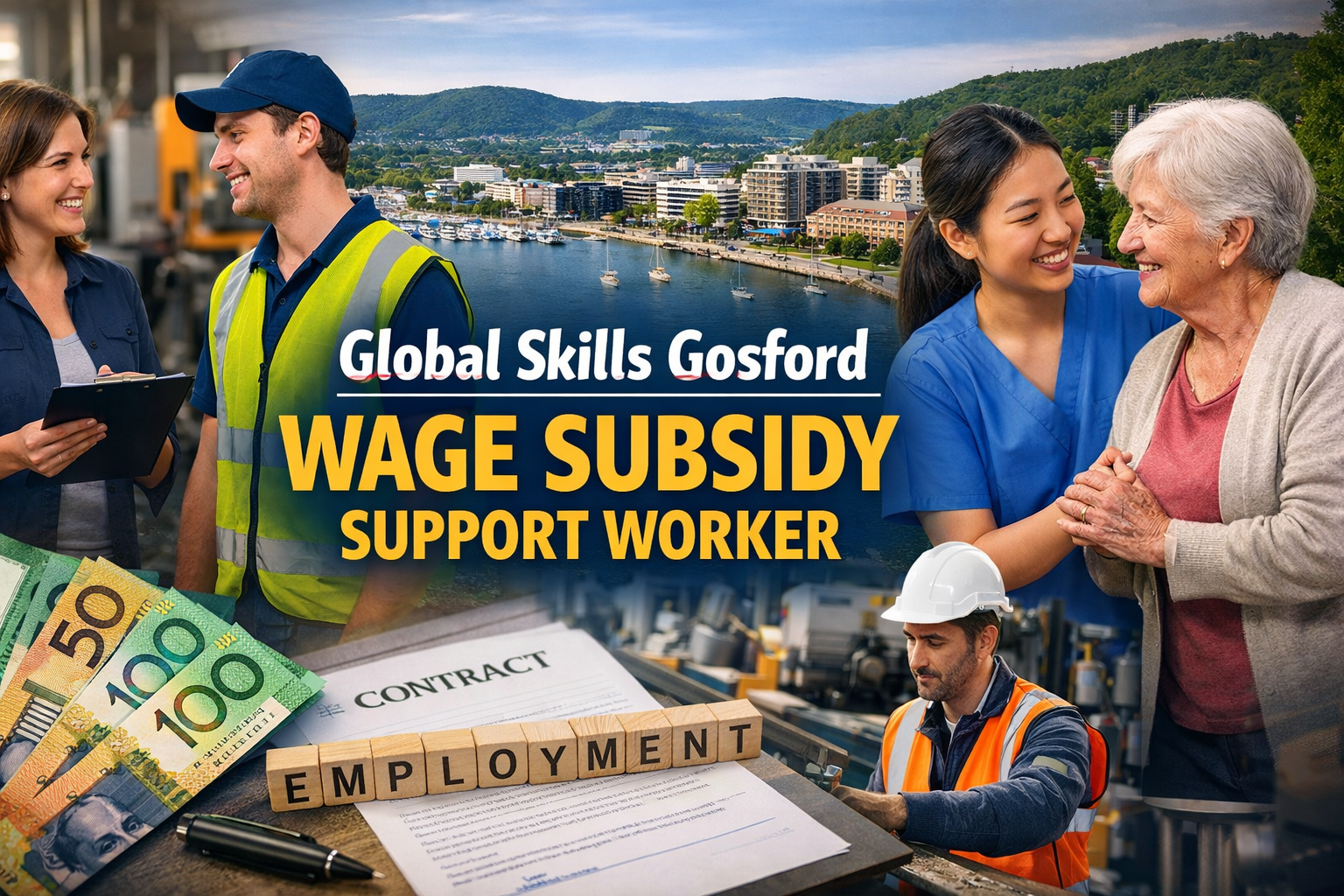
In regional New South Wales, employment is more than a statistic. It shapes families, communities, and long-term stability. On the Central Coast, one initiative has quietly transformed how job seekers and employers connect: the global skills gosford wage subsidy support worker program. While the phrase may sound administrative at first glance, its impact is deeply personal. It bridges the gap between unemployment and opportunity, particularly for people who face barriers that most of us rarely consider.
The global skills gosford wage subsidy support worker initiative operates through employment services in Gosford, aligning with Australia’s broader workforce development strategies. It combines wage subsidies for employers with structured support for individuals seeking meaningful employment. The result is not just job placement, but structured, supported integration into the workforce.
Understanding this program requires more than a surface explanation. It involves recognizing the social and economic context of the Central Coast, the operational framework of employment service providers, and the human stories behind each placement. In a region that has experienced economic shifts, industry restructuring, and fluctuating unemployment rates, this wage subsidy model has become an essential tool for workforce participation.
The Foundation of the Program in Gosford
Gosford sits at the heart of the Central Coast of New South Wales. Historically, the region has balanced residential growth with service-based employment, retail, healthcare, and construction. However, like many regional areas, it has experienced waves of unemployment during economic downturns. Young people, mature-age workers, migrants, and individuals with disabilities have often found themselves competing in a tight job market.
READ MORE: servicio inmediato nacional: Response That Transforms Lives!
The global skills gosford wage subsidy support worker framework was designed to directly address these challenges. By offering financial incentives to employers willing to hire eligible job seekers, the program reduces the perceived risk of recruitment. Wage subsidies can offset training costs, initial productivity gaps, and onboarding expenses.
What makes the model distinctive is that it does not stop at financial support. The support worker component ensures ongoing guidance for both employer and employee. This structured support can include mentoring, workplace adjustment assistance, and regular check-ins. It transforms a simple job placement into a supported employment partnership.
How Wage Subsidies Work in Practice
At its core, the global skills gosford wage subsidy support worker system operates on a straightforward principle. Employers receive financial assistance when they hire eligible candidates who have faced employment barriers. These barriers may include long-term unemployment, disability, limited work history, or socioeconomic disadvantage.
The subsidy is not a handout. It is conditional. Employers must meet employment standards, provide appropriate training, and maintain fair workplace conditions. Payments are typically structured over time, ensuring that placements are sustained rather than short-term or superficial.
For employers in Gosford, this can mean reduced financial pressure during the first few months of employment. For job seekers, it can mean access to opportunities that might otherwise be out of reach. For the broader community, it translates into economic participation and reduced reliance on income support.
The involvement of a global skills gosford wage subsidy support worker ensures accountability. These professionals coordinate between job seekers, employers, and funding bodies. They monitor progress, resolve issues early, and support workplace integration.
The Role of Global Skills Australia
The program operates through employment service providers such as Global Skills, which delivers workforce assistance across multiple regions in New South Wales. In Gosford, their role extends beyond paperwork and compliance. They actively engage with local businesses, community groups, and training organizations to create genuine employment pathways.
Global Skills staff members often come from backgrounds in human resources, social services, or vocational training. Their approach is relationship-driven. Employers are not simply handed a candidate; they are guided through the hiring process and supported afterward.
The global skills gosford wage subsidy support worker acts as both advocate and facilitator. For job seekers who may lack confidence, interview skills, or workplace experience, this support can be transformative. For employers unfamiliar with wage subsidy schemes, it removes administrative complexity and uncertainty.
The Human Dimension Behind the Program
Statistics alone cannot capture the emotional weight of long-term unemployment. In regional communities, job loss can ripple through families. Confidence erodes. Skills become outdated. Social isolation grows.
The global skills gosford wage subsidy support worker model acknowledges that employment is not just economic; it is psychological and social. Support workers often help individuals rebuild routines, practice communication skills, and adapt to workplace expectations. They act as mentors during the fragile early weeks of employment.
There are stories of mature-age workers who had not applied for a job in decades, young people who struggled after leaving school, and migrants navigating unfamiliar workplace cultures. The wage subsidy reduces the employer’s financial hesitation, but the support worker addresses the human element.
This dual structure is what distinguishes the initiative from basic job matching services.
Regional Impact on the Central Coast Economy
When more residents gain employment, local businesses benefit. Increased household income translates into higher consumer spending within the region. The Central Coast economy, including areas surrounding Gosford, relies heavily on small and medium-sized enterprises.
By encouraging employers to hire locally through the global skills gosford wage subsidy support worker system, the program supports regional resilience. Employers who might otherwise hesitate to expand their workforce gain confidence.
The ripple effect includes reduced strain on welfare systems, greater community engagement, and long-term workforce stability. In areas where youth unemployment has historically been higher than metropolitan Sydney, structured employment initiatives make a measurable difference.
Challenges and Misconceptions
Despite its benefits, wage subsidy programs can face skepticism. Some employers worry about administrative burdens. Others question whether candidates placed through subsidy programs are sufficiently prepared.
The reality is that the global skills gosford wage subsidy support worker initiative addresses these concerns through ongoing engagement. Support workers ensure that both parties are aligned. If issues arise, they intervene early.
Another misconception is that wage subsidies create dependency. In practice, most placements aim for long-term employment beyond the subsidy period. Employers often retain workers permanently once they have proven their value.
Transparency, accountability, and relationship management are central to maintaining program integrity.
Alignment with National Workforce Strategies
The initiative operates within Australia’s broader employment services framework, including reforms introduced under Workforce Australia. These reforms aim to tailor support to individual needs rather than applying a one-size-fits-all model.
Within this national structure, the global skills gosford wage subsidy support worker model represents a localized implementation. It adapts federal policies to regional realities.
This alignment ensures funding stability and regulatory oversight, while allowing flexibility at the community level. Local labor market insights inform placement strategies, ensuring that wage subsidies target industries with genuine workforce demand.
The Support Worker’s Daily Responsibilities
The phrase global skills gosford wage subsidy support worker may appear administrative, but the role itself is highly relational. A typical day may involve meeting with employers to discuss staffing needs, preparing job seekers for interviews, and reviewing eligibility criteria for wage subsidies.
Support workers also manage documentation and compliance requirements. Government funding requires accurate reporting, and professionals in this role must balance compassion with procedural precision.
Perhaps most importantly, they maintain ongoing contact after placement. They might visit workplaces, check on performance, and offer mediation if minor conflicts arise. This hands-on involvement significantly increases retention rates.
The role demands patience, communication skills, and a deep understanding of both business and human behavior.
Long-Term Outcomes and Sustainability
Programs like global skills gosford wage subsidy support worker initiatives are most successful when they produce sustainable employment rather than temporary placements. Data from similar employment models suggests that supported wage subsidies often lead to higher retention compared to unsupported placements.
Employers who initially participate for financial reasons frequently discover the broader value of inclusive hiring. Over time, the subsidy becomes less central than the productivity and loyalty of the employee.
Sustainability also depends on continuous funding and policy support. Changes in government priorities can influence program design, but regional demand for employment services remains constant.
In Gosford, where population growth continues, workforce integration programs are likely to remain relevant for years to come.
READ MORE: satexch: The Digital Powerhouse Redefining Exchange Era Now!
Conclusion
The global skills gosford wage subsidy support worker initiative represents more than an employment scheme. It is a bridge between potential and opportunity. By combining financial incentives for employers with structured human support, it addresses both economic and psychological barriers to work.
In the evolving employment landscape of regional New South Wales, such programs offer stability. They empower individuals who might otherwise be overlooked. They strengthen local businesses. They reinforce community resilience.
Behind every wage subsidy approval form is a person seeking purpose and security. Behind every employer agreement is a willingness to invest in someone’s future. When those elements align, the result is lasting impact.
The true strength of the global skills gosford wage subsidy support worker framework lies not in policy language, but in its lived outcomes. It is a quiet but powerful force shaping employment pathways on the Central Coast.
FAQs
What is the purpose of the global skills gosford wage subsidy support worker program?
The program is designed to help eligible job seekers gain employment by offering financial incentives to employers while providing structured workplace support to ensure successful integration.
Who can benefit from the global skills gosford wage subsidy support worker initiative?
Eligible job seekers facing barriers such as long-term unemployment, disability, or limited work history can benefit, as well as employers seeking financial assistance during the hiring process.
How long does the wage subsidy last under this program?
The duration varies depending on eligibility criteria and funding arrangements, but subsidies are typically structured over a set employment period to encourage sustained placement.
Is the support worker involved after the employee is hired?
Yes, the support worker maintains contact with both employer and employee, offering guidance, monitoring progress, and resolving issues to improve retention.
Does participation guarantee permanent employment?
While permanent employment is not guaranteed, many placements continue beyond the subsidy period when the employer recognizes the employee’s value and performance.